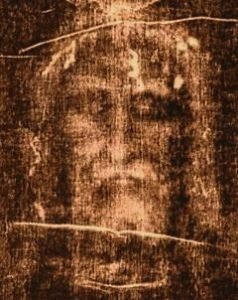
Le 18 avril dernier sur la radio belge RCF, un numismate spécialiste en monnaie ancienne, le Dr Agostino Sferrazza a expliqué ses recherches afférentes à l’image de l’œil droit. Il l’a rapprochée d’une monnaie romaine gravée d’une crosse ressemblant à un point d’interrogation correspondant aux caractéristiques découvertes sur le Suaire. Chez les Étrusques, le lituus était un bâton terminé par une crosse qui servait pour les rites sacrés ; notamment pour le bornage des temples et déterminer les augures. De là proviendrait la crosse des évêques et le mot de « liturgie ». Mais surtout sur cette monnaie est inscrit le nom de Lentulus. C’était un consul romain qui était en Palestine vers les 26 après Jésus Christ. Ponce Pilate était gouverneur de Judée entre l’an 26 et 36. Le Christ a été crucifié en l’an 33. Cette pièce de monnaie en cuivre est un lepton de peu de valeur à l’époque ; il était en usage du temps du Christ en Palestine. L’expert en date la confection vers l’an 29 après J.C et déclare avoir a fait cette découverte le Vendredi saint dernier.
 AREAM SUAM
Nouvelle confirmation de l’authenticité du Saint Suaire de Turin
Original language
Articles on the same topic
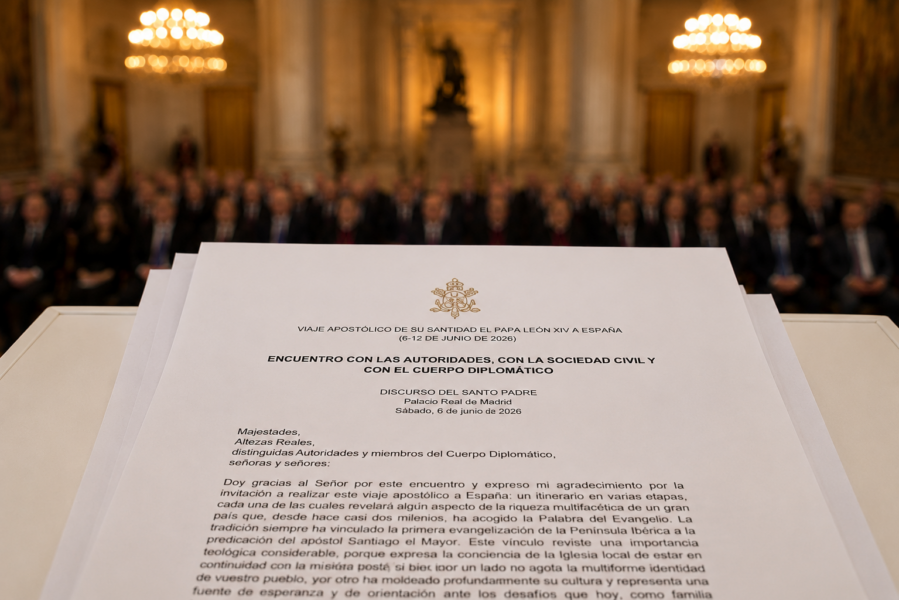
What many have not understood about Leon XIV's first speech in Spain
At first glance, the Pope's discourse appears impeccable. But a closer reading reveals a troubling shift in priorities that deserves careful attention.
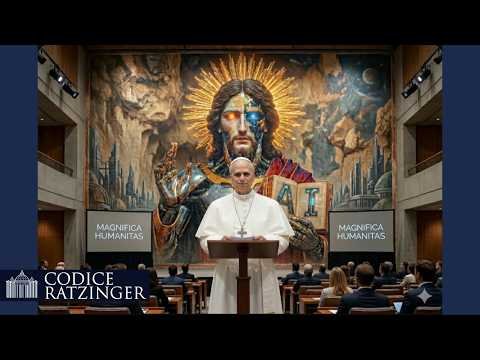
AI: the Word that was NOT made Flesh.
An Antichrist that uses Light and its Vicar.
Dr. Andrea Cionci dismantles the encyclical « Magnifica Humanitas » of antipope Leo XIV, defining it as a gnostic promotion of artificial intelligence, which is a « word without flesh ». In this brilliant reflection, he asserts that AI, based on light and electricity, embodies the Antichrist, and that Leo XIV is its vicar, thereby overturning Christian values centered on incarnation and redemption.
RATZINGER said it: is CHRIST disappearing from the VATICAN today?
Religious humanism and its dangers
In 2026, the world is plunged into practical nihilism: nothing has meaning, everything is relative, humanity is reduced to a machine governed by algorithms and optimization logic. Faced with this spiritual void, the Church proclaims noble values – human dignity, fraternity, solidarity – but a crucial question arises: are these values rooted in Christ and transcendence, or in atheistic humanism, emptied of its supernatural content?