
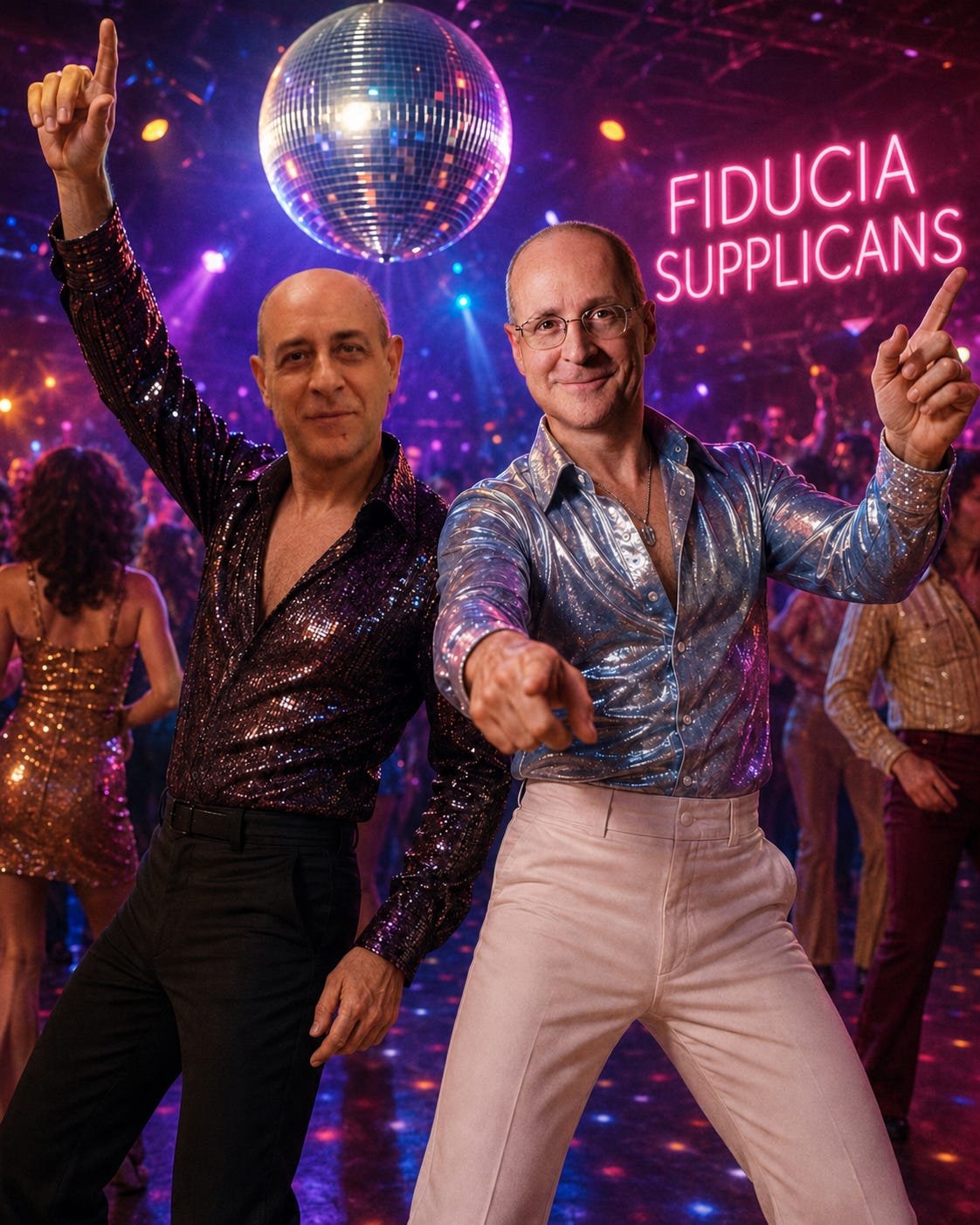
The Vatican Finally Found Its Soundtrack
Every regime eventually composes its own soundtrack. The postconciliar regime, apparently, has chosen Dancing Queen.
Hiraeth In Exile is a reader-supported publication. To receive new posts and support my work, consider becoming a paid subscriber.
Not in some harmless nostalgic corner where aging boomers remember polyester, disco balls, and whatever remained of Western civilization before the internet finished it off. The song was played in St. Peter’s Square during a General Audience of Leo XIV, alongside other seventies fare like Neil Diamond’s Sweet Caroline. Raymond Arroyo asked the obvious question: is Dancing Queen an appropriate song for a General Papal Audience?
No. It is not appropriate.
Anyone pretending not to understand its cultural coding is playing the usual game. Dancing Queen has long been treated as a gay anthem, associated with camp, queer nightlife, Pride culture, and LGBTQ social spaces. The Los Angeles Times described the song as “synonymous with queer nightlife,” while Xtra readers once chose it as their favorite Pride anthem.
So when that song turns up in St. Peter’s Square, during a papal audience, under a pontificate already surrounded by rainbow signals, one does not need paranoia to notice the pattern. One only needs ears.
The defenders, naturally, rushed in with their usual blend of condescension and sacrilege. Rich Raho replied to Arroyo by writing, “David was a dancing queen young and free and the best king the Bible did see until Jesus.”
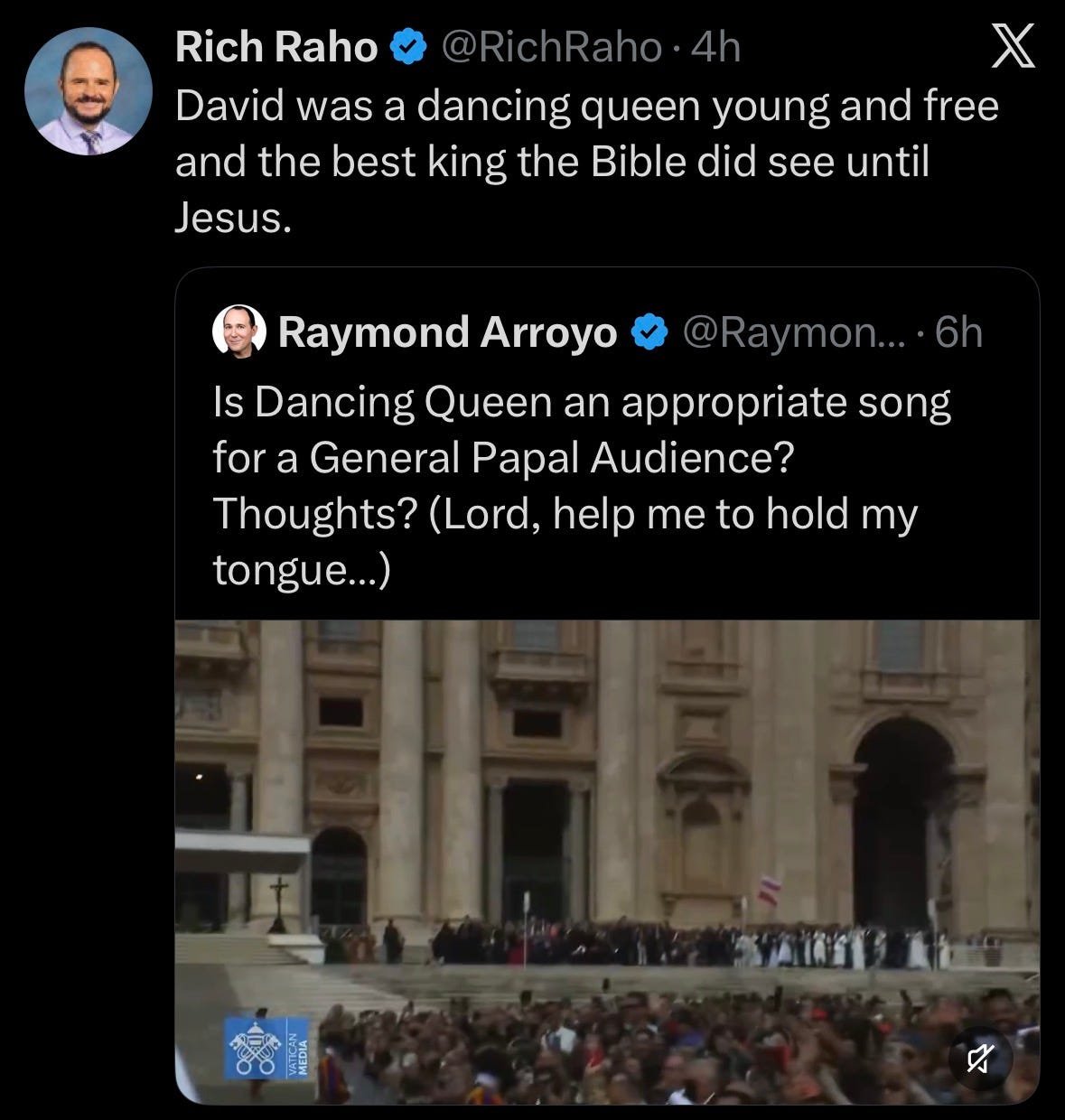
There it is. The entire postconciliar method in one stupid sentence.
Take something sacred. Drag it into a pop-cultural idiom. Pretend the desecration is biblical. Then sneer at anyone still capable of reverence.
The Rainbow Thread Running Through Rome
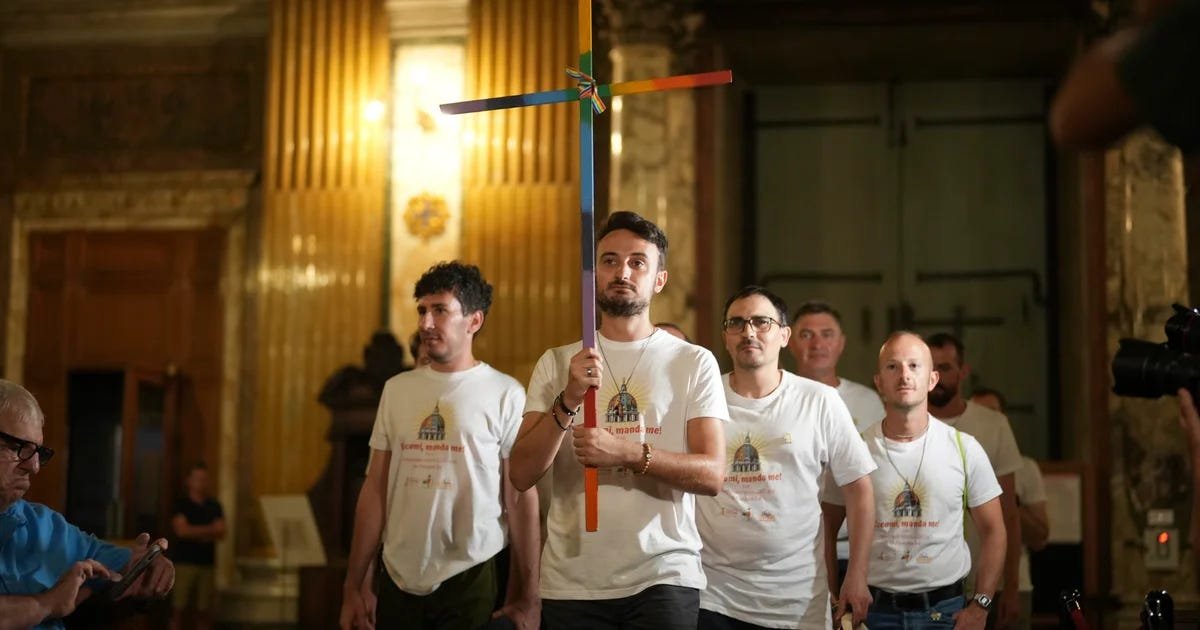
A single bad song could be dismissed as bad taste. The problem is that Dancing Queen did not fall from the sky. It landed on a Vatican already steeped in the Francis-era settlement on homosexuality, a settlement Leo XIV has shown no serious intention of reversing.
Fiducia Supplicans opened the door to blessings of couples in irregular situations and same-sex couples while insisting that such blessings must not be confused with marriage or ritualized as liturgy. The Vatican’s later clarification repeated the same formula: simple, spontaneous, non-liturgical blessings, supposedly without approval of the union.
That was always the trick. Rome did not need to declare homosexual unions good in a clean doctrinal sentence. It only needed to create a pastoral exception, protect it with ambiguity, and then let the bishops, theologians, activists, and media do the rest.
Leo XIV has not torn this machine apart or disciplined the bishops who exploit it. Instead, the Francis trajectory continues.
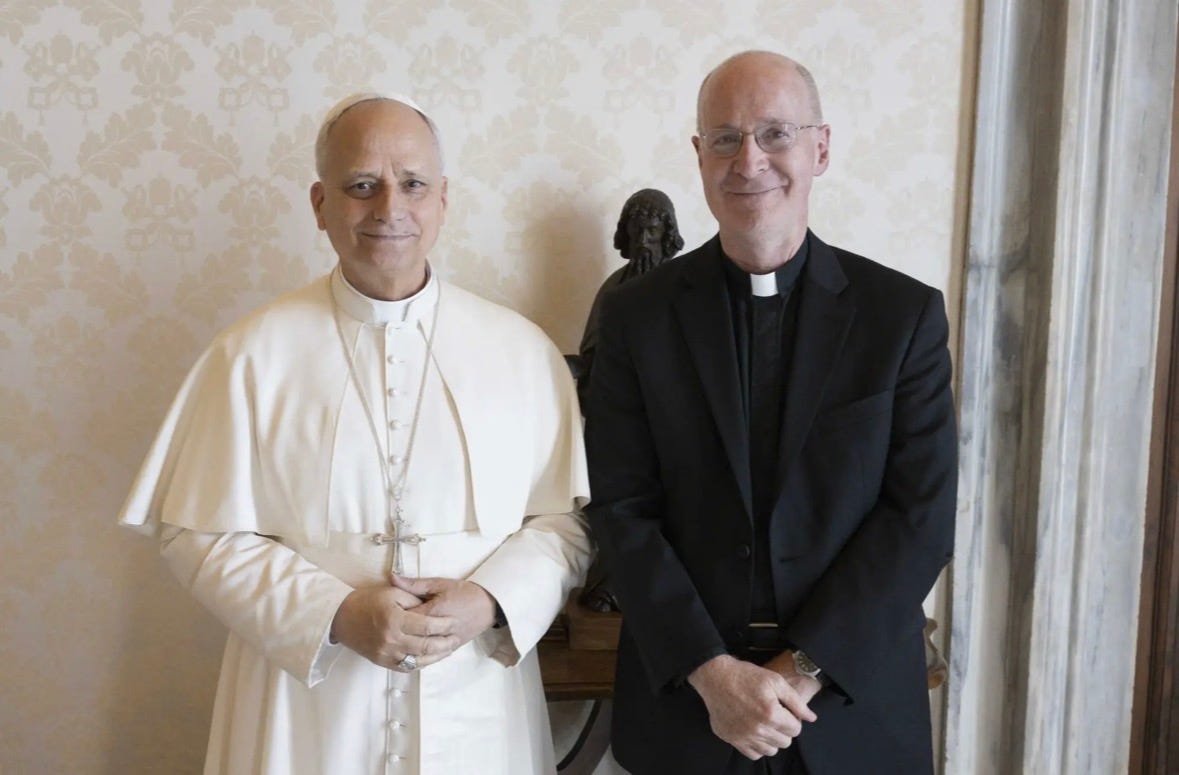
Fr. James Martin received his audience and emerged saying Leo encouraged him to continue his LGBTQ ministry in the same spirit of openness associated with Francis.
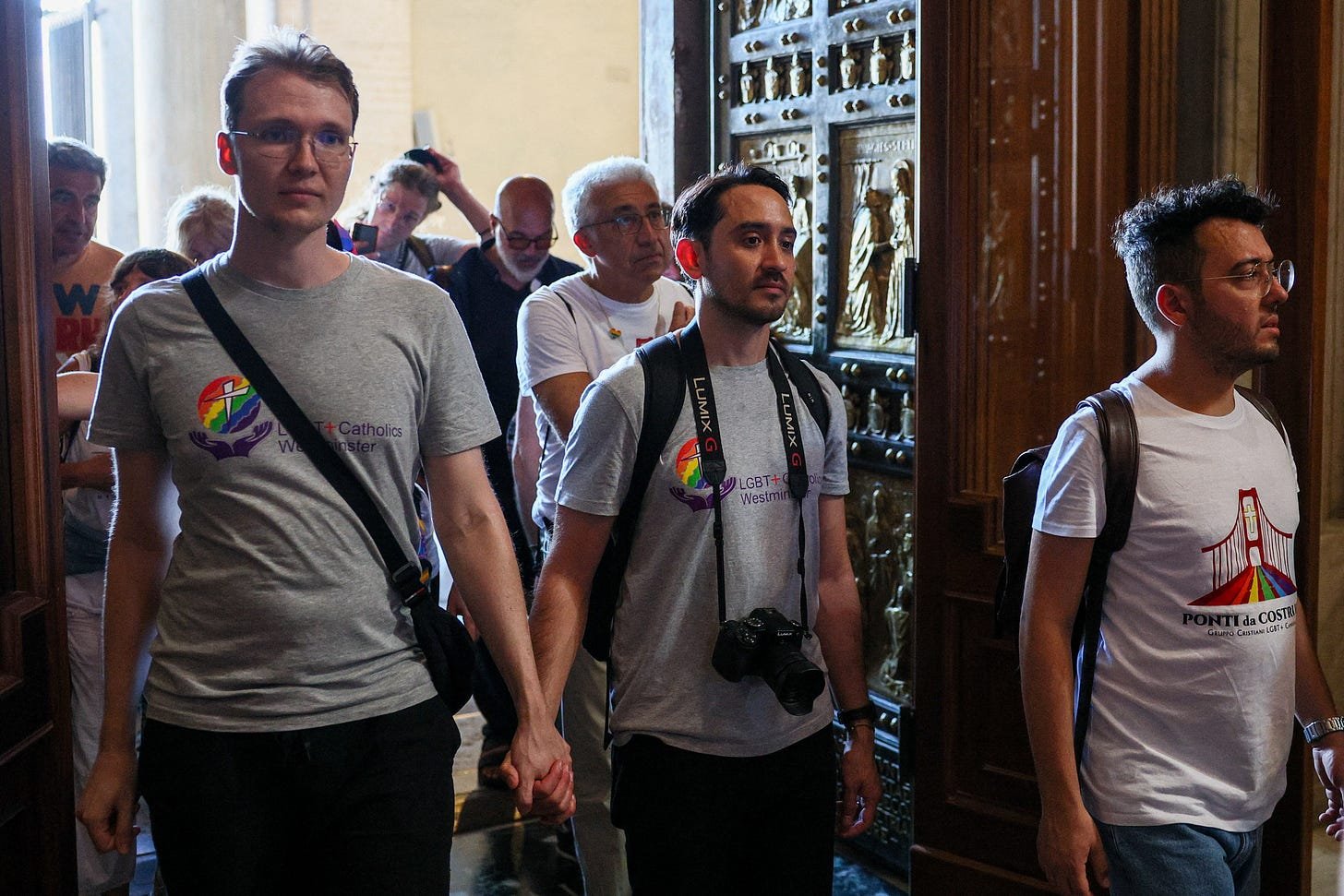
The LGBTQ Jubilee pilgrimage passed through the Holy Door of St. Peter’s, with Outreach and other groups treating the event as another sign of Vatican welcome. Reports described more than a thousand LGBTQ pilgrims entering St. Peter’s, some carrying Pride colors, while CatholicCulture noted placards and shirts including at least one crudely obscene slogan critical of Church teaching.
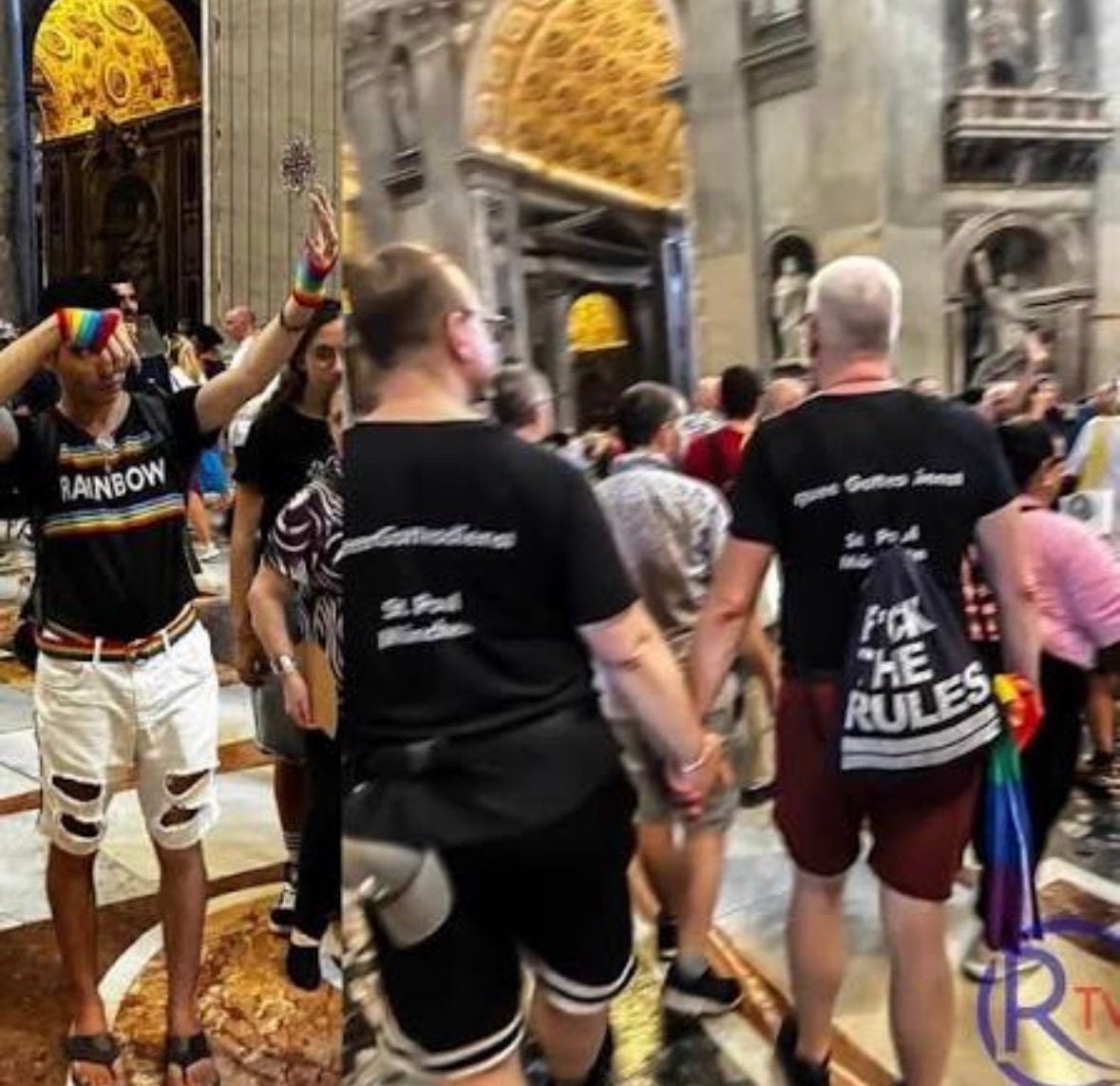
The Washington Post reported that the LGBTQ Jubilee event was permitted on the official Holy Year calendar, and that Bishop Francesco Savino said both Francis and Leo personally authorized his celebration connected with the pilgrimage.
Then there is the strange story of papal vesture being filtered through yet another “acceptance” narrative. Filippo Sorcinelli, an openly gay designer associated with Vatican liturgical vesture work, has been profiled in secular outlets precisely through the lens of sexuality, art, and Catholic imagery. Every single symbolic layer around the modern Vatican seems to get translated into the same language: acceptance, identity, inclusion, welcome, creative tension.
Once upon a time, vestments were meant to disappear into worship. Now even papal fabric becomes another media parable about sexual identity.
And over all of it, in St. Peter’s Square, the Vatican plays Dancing Queen.
The symbolism is almost too on the nose.
Study Group 9: Gay “Marriage” by Way of a Question Mark
The deepest scandal is not the song. The deepest scandal is the doctrinal machinery underneath it.
Study Group 9 of the Synod on Synodality, covered in detail yesterday, has now provided the more serious version of the same revolution. Its final report includes testimony from persons with same-sex attraction and frames their experiences as part of the process for “shared discernment” on doctrinal, pastoral, and ethical issues.
The report includes testimony stating that sin “does not consist in the same-sex couple relationship” but in lack of faith. It presents stable same-sex affective relationships, self-acceptance, contextual readings of Scripture, and movement beyond “pre-packaged doctrine” as part of the synodal path. It explicitly raises the question whether one can speak of “marriage” in relation to persons with same-sex attractions, even while noting differences such as procreation.
That is how revolutions advance inside Catholic institutions. They begin with a question. Then the question becomes a listening session. The listening session becomes a pastoral problem. The pastoral problem becomes a theological “tension.” The tension becomes a study group. The study group becomes a document. The document becomes a local experiment. The experiment becomes a “lived reality.” Then Rome, having watched the fire spread, announces that it must accompany the smoke.
This is why the outrage over Dancing Queen is justified. The song is not the doctrine. It is the atmosphere around the doctrine. It is the soundtrack to the theological softening of sin.
The old Church said that sins against nature cried to Heaven for vengeance. The new apparatus asks whether the union can be “discerned” under a more inclusive framework.
Tucho’s Stop Sign After Building the Highway
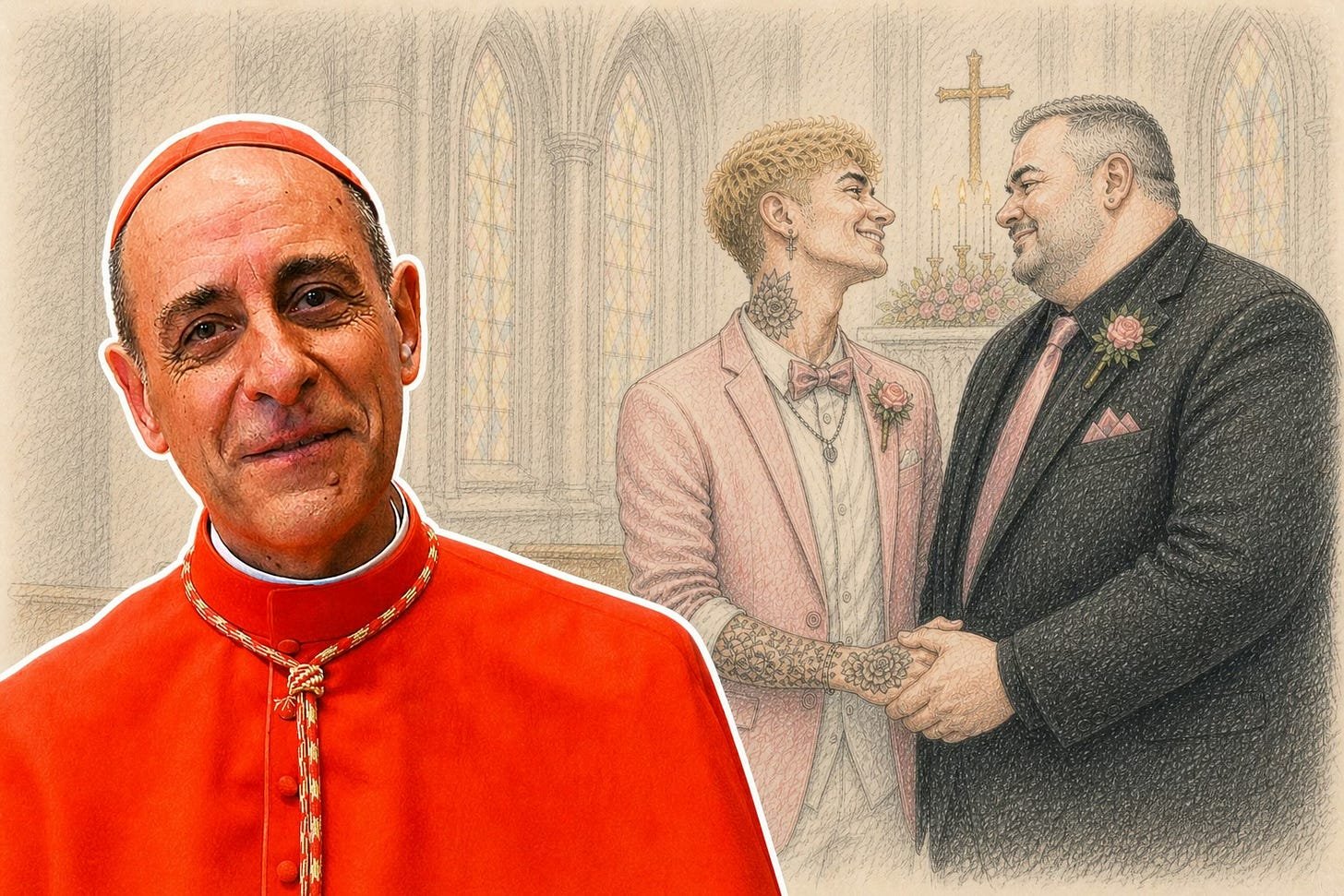
Even Cardinal Víctor Manuel Fernández, the soft-porn theologian now occupying the Dicastery for the Doctrine of the Faith, apparently found the German bishops too obvious.
A newly public 2024 letter shows Fernández warning Bishop Stephan Ackermann that proposed German guidelines for blessings of same-sex and irregular couples risked legitimizing such unions and creating a ritual or para-liturgy. The letter reportedly objected to structured ceremonies, music, fixed forms, and anything resembling liturgical recognition.
But what followed?
The Germans kept going. Cardinal Reinhard Marx’s Archdiocese of Munich issued guidance requiring priests and pastoral workers to use a handout titled “Blessing Gives Strength to Love,” while reports noted that priests unwilling to perform such blessing celebrations were expected to refer couples elsewhere.
This is the entire farce. Rome writes documents broad enough to unleash chaos, then writes private letters complaining that the chaos looks chaotic. Nobody is removed. Nobody is seriously punished. Nobody is made an example. The orthodox are expected to be grateful for a sternly worded letter while the revolution proceeds in public.
Study Group 7: Bishops by Focus Group
As if Study Group 9 were not enough, Study Group 7 has now applied the synodal method to the selection of bishops.
The official report still includes old Catholic-sounding criteria: moral integrity, doctrinal orthodoxy, pastoral sensitivity, leadership ability, and administrative capacity. But those phrases are immediately placed inside the new synodal grammar, where a bishop must also possess “synodal competencies,” dialogue style, openness to complexity, innovation, and adaptation.
Then comes the machinery.
The report proposes wider consultation with cathedral chapters, finance councils, lay councils, youth, the poor, women, academics, ecclesial movements, marginalized persons, Indigenous or minority communities, and even a committee to work with the Apostolic Nuncio during a vacancy. It also states that it is possible to hear from representatives of civil society and the cultural sphere, as well as those who do not profess faith or who have left ecclesial practice.
Read that again slowly.
Those who do not profess the faith, and those who have left ecclesial practice, may be consulted in the selection of bishops.
The successor of the Apostles is now to be filtered through the sociology of stakeholders. The man who should guard the deposit of faith may be evaluated by people who reject the faith, abandoned the faith, or never professed it in the first place.
The bishop becomes less a successor of the Apostles and more a synodal HR candidate who can keep the priests, women religious, youth delegates, activists, minorities, unbelievers, and ex-Catholics feeling sufficiently heard.
And then we are supposed to wonder why the Church is drowning in ambiguity.
Cardinal Sarah and the Managed Opposition Problem
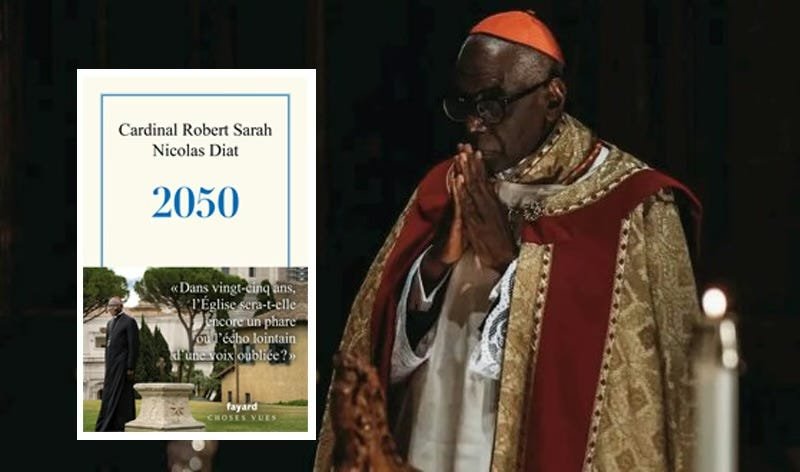
This brings us to Cardinal Robert Sarah.
Sarah says many true things. That is what makes his position so dangerous.
In his interview with La Nef, he warned of paganism within the Church, naming the fading sense of sin, embarrassment over revealed truth, trivialized liturgy, fascination with worldly categories, and forgetfulness of the Church’s supernatural purpose. He also admitted that Vatican II texts on religious liberty, ecumenism, collegiality, and the Church’s relationship with the modern world require further clarification because they have generated divergent and even opposing interpretations.
Good. Very good.
Then comes the fatal turn.
On the SSPX’s announced episcopal consecrations, Sarah warned that such an act would wound visible unity and urged fasting and prayer so that the “irreparable” might be avoided. Earlier reporting had him warning of disobedience and possible “irreversible rupture.”
Here is the problem. Sarah can describe the disease with almost surgical precision, then tell the patient to remain under the authority of the very doctors spreading the infection.
He sees paganism, doctrinal ambiguity, liturgical trivialization and the fading sense of sin. He sees the areas where Vatican II has been used to justify rupture. Yet when the SSPX faces the concrete question of preserving bishops for Tradition, his counsel is effectively this: fast, pray, and do nothing that would upset the hierarchy responsible for the catastrophe.
That is why Sarah functions as managed opposition.
One need not claim he is cynical. He may be entirely sincere. He may genuinely believe he is defending unity. But in practice, his role is the same role played by Cardinals Burke and Muller: speak enough truth to keep the alarmed faithful inside the corral, then denounce any concrete act that would actually preserve Tradition outside the corral.
The SSPX’s own response put the contradiction plainly. It listed the Roman scandals of recent years: Communion for the divorced and remarried, blessings of irregular couples, religious pluralism language, attacks on Marian titles, and attempts to phase out the traditional missal. It observed that Sarah himself opposes many of these innovations, yet still invites obedience to those at the root of them.
Exactly.
Sarah wants the SSPX not to consecrate bishops. But what is the alternative? Trust Leo XIV? Trust the Synod? Trust the same Roman apparatus now studying whether homosexual unions can be discussed analogously to marriage? Trust the same Vatican that allows unbelievers and ex-Catholics into the bishop-selection conversation? Trust the same system that lets Germany run ahead while Rome complains in private letters?
Sarah, Medjugorje, and the Conservative Blind Spot
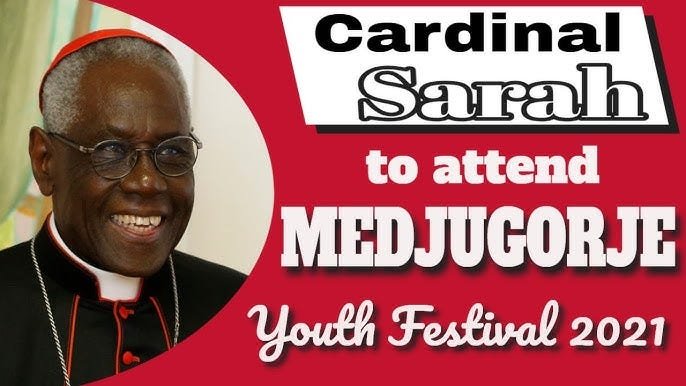
Sarah’s weakness is not limited to the SSPX question. His posture toward Medjugorje reveals the same conservative instinct to preserve pious sentiment even when clarity is desperately needed.
Sarah has spoken favorably in the Medjugorje pilgrimage context, telling pilgrims in 2021 that they had come for spiritual exercises, to meet the Lord, and to recharge their spiritual batteries.
Sarah’s indulgence toward Medjugorje exposes the same conservative weakness: the willingness to preserve a pious-looking phenomenon even when it speaks in the language of the postconciliar revolution. The Medjugorje message-world repeatedly blurs the Catholic distinction between the one true Church and false religion, with claims about members of all faiths being “equal before God” and God ruling over each faith like a sovereign over his kingdom.
Pope Gregory XVI condemned religious indifferentism, Pope Pius XI condemned false ecumenism, and the whole Catholic tradition teaches that Our Lady does not descend from Heaven to preach Vatican II’s theology of religious pluralism in peasant costume.
The SSPX Is Being Asked to Choose Between Death and Capture
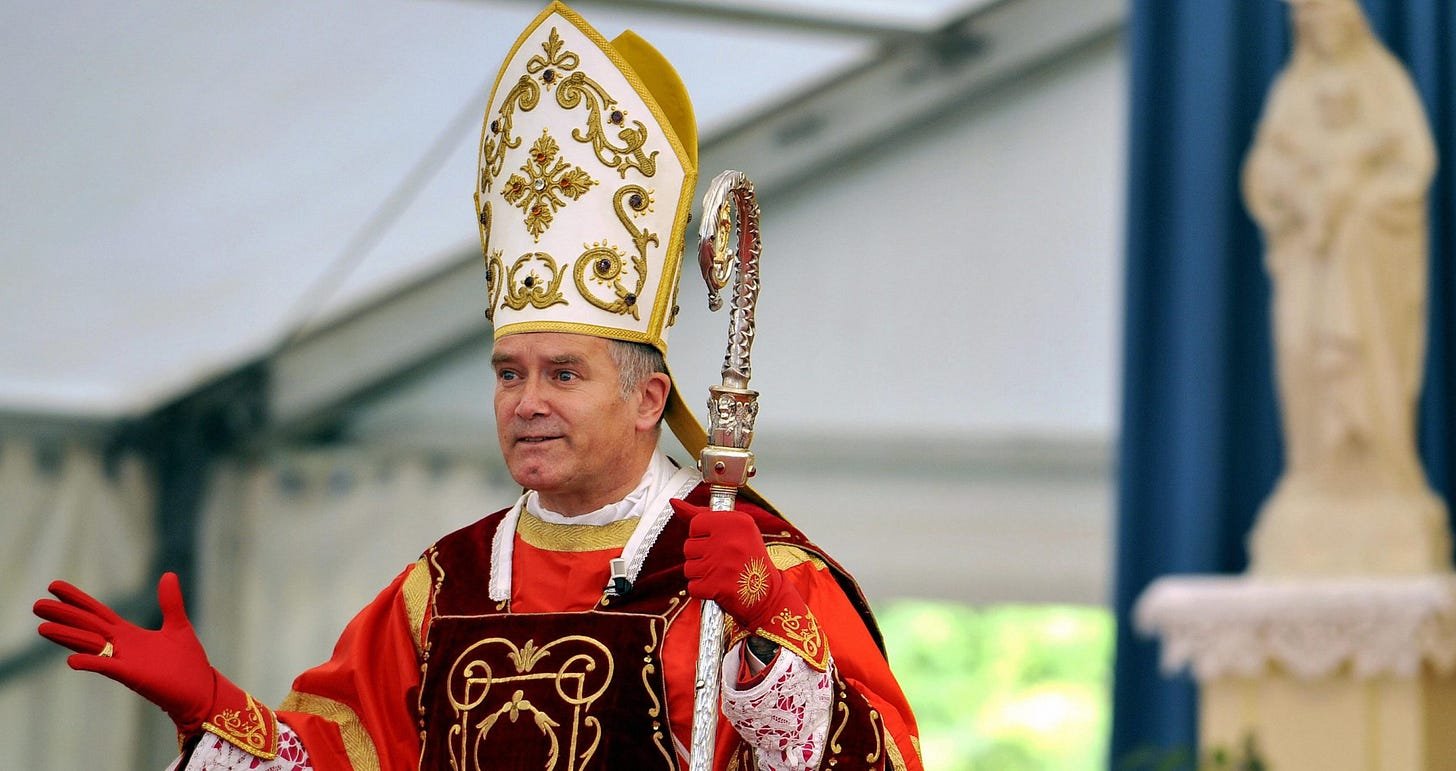
The SSPX question is the test case.
If the SSPX consecrates bishops, Rome will scream about unity. If the SSPX does not consecrate bishops, time will do what Rome cannot yet do directly. Bishops age. Priests die. Seminaries need ordinations. Sacraments need ministers. Tradition cannot live forever on borrowed episcopal time.
Sarah’s position asks the SSPX to wait for permission from a Rome that has spent decades proving it will use permission as leverage. That is the trap.
Regularization under modern Rome always comes with the same implied bargain: you may exist, keep some liturgy, have lace, Latin, and incense, provided you don’t seriously resist the doctrinal architecture that destroyed the liturgy or name the revolution too loudly. You may criticize abuses, but not the principles that produced them.
That is how the system absorbs resistance. It gives conservatives enough room to feel brave and enough leash to prevent escape.
Cardinal Burke plays this role. Cardinal Müller plays this role. Cardinal Sarah, however nobly and devoutly he speaks at times, plays this role too. They are allowed to mourn the smoke while forbidding anyone to leave the burning building.
The Disco Ball Over the Abyss
Rome can tolerate ambiguity on sin, bishops who undermine marriage, synodal reports that place divine revelation under pastoral review, and German defiance. It can tolerate obscene slogans in the shadow of St. Peter’s. It can tolerate almost anything.
But let Tradition secure bishops for survival, and suddenly everyone remembers law, unity, obedience, hierarchy, and wounds to the Mystical Body.
How convenient.
Let the modernists keep their disco.
Tradition needs bishops, sacraments, doctrine, and enough spine to stop mistaking managed opposition for resistance.