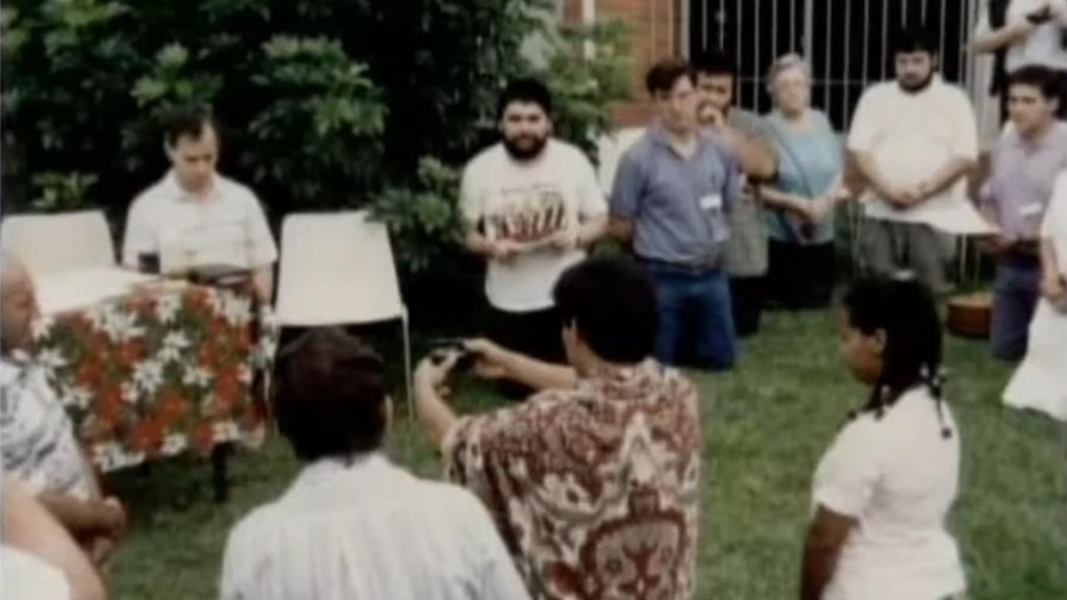
But there is a point that cannot be evaded: the images exist. And they are not an interpretation, but a concrete fact. In them one sees a Pachamama rite with clear gestures: genuflection, prostration, words directed to the earth in a context of symbolic exchange. That is the starting point. From there, nuances can be made about intention, cultural context, or possible good faith. But the act, in itself, is not neutral. And it is not because there are gestures that, in the religious sphere, have an objective meaning that does not disappear by the intention with which they are performed. Reducing them to mere theatricalization does not avoid the confusion.
The first reaction to these images is not necessarily a cold judgment, but something more uncomfortable: a certain disorientation. When someone who tends to be placed on a high plane appears in such a scene, not only scandal is produced, but also bewilderment. An image is shattered. And behind it does not appear something exceptional, but a known reality: human weakness. It is not a pleasant discovery, but neither is it something foreign.
Now, recognizing that fragility cannot serve as an excuse. The fact remains. And such an act, even if attempted to be explained as inculturation or as an external gesture, is objectively disordered. It should not have occurred. Saying so is not being harsh, but avoiding distorting reality.
The fundamental question is not only what happened thirty years ago, but what can happen now. The problem is silence. When there is confusion, silence does not calm it, it increases it. The believer needs to reconcile what he sees with what he believes, and without a clear word that reconciliation becomes more difficult.
That word would not have to be defensive or evasive. On the contrary, a clear acknowledgment of a past error would not weaken authority, but could strengthen it. It would show that truth is not subordinated to image and that humility is compatible with office. In a context of confusion, such a gesture would not close the debate, but would introduce the clarity that is now lacking.
This episode is neither isolated nor incomprehensible. It fits into a deeper logic of crisis. At La Salette the Virgin did not announce a definitive collapse, but a painful purification, a combat in which faith is shaken even in the highest instances, precisely to be purified and restored. Read from there, these situations cease to be absurd and become part of a larger story, where confusion does not have the last word. Hope is not born from denying facts, but from knowing that the Church is not sustained by the infallibility of men, but by a promise that runs through even its darkest moments. For this reason, far from inviting discouragement, this time demands lucidity, firmness and trust.