
The DOJ announced on April 30 that its Task Force to Eradicate Anti-Christian Bias had produced a major report reviewing policies and actions across seventeen federal agencies. The Department described the core report as 200 pages, supported by more than 1,100 footnotes and more than 300 pages of exhibits. The report frames the Biden administration as having used federal power against Christians in areas touching life, family, sexuality, education, medical decisions, vaccine mandates, conscience protections, and religious speech.
The FBI’s Richmond Field Office under Joe Biden produced an intelligence product treating “radical-traditionalist Catholics” as a potential extremism vector. The controversy became so embarrassing that Christopher Wray publicly called the memo “appalling,” while Merrick Garland also criticized it after it surfaced. Later congressional disclosures indicated that FBI material connected to the memo had been distributed far more widely than the original public narrative suggested.
The important point is that the government knew where to look. It did not start by worrying about Catholic yoga retreats, synodal listening circles, “Care for Creation” parish gardens, or diocesan offices producing rainbow-themed pastoral resources. It worried about people who still believed Catholic doctrine as if it were more than a personal lifestyle preference. It worried about Catholics with old Mass instincts, old moral instincts, old loyalties, old enemies, old certainties. It worried about Catholics who might believe that abortion is murder, that marriage is not a wax figure to be reshaped by the courts, that the State has no right to command obedience against God, and that the Faith is public truth.
That is why this story pairs so neatly with the rest of the week. The federal government still recognizes something that many bishops pretend not to see. Old Catholicism, real Catholicism, pre-managed Catholicism, still makes modern power nervous.
A bureaucrat can tolerate religion as long as religion behaves like a wellness practice. Say your prayers. Light your candles. Keep your Latin chants in a reservation chapel on the edge of town. Just do not build a world out of it. That, apparently, is when the file gets opened.
Compiègne Gets a Canonization, Then a Closing Notice

Now set that beside France.
The Carmel of Compiègne was founded in 1641. Its sixteen martyrs were expelled during the French Revolution and guillotined in Paris on July 17, 1794, out of hatred for the Faith. For months before their death, they offered themselves for the restoration of peace to the Church and the State. Their story became known around the world through Bernanos and Poulenc’s Dialogue of the Carmelites. Francis approved their equipollent canonization on December 18, 2024. A thanksgiving celebration was held in Compiègne on May 8, 2025, the same day Leo XIV was elected.
And now the living Carmel is closing.
There are six nuns left in Jonquières, about six miles from the original site. Bishop Jacques Benoit-Gonnin announced the closure on April 21, explaining that age has advanced, numbers have decreased, vocations are slow, and outside reinforcements could not be found. The nuns will leave gradually in the coming months.
That is almost too perfect.
The postconciliar Church can canonize the martyrs. It can arrange commemorations, plaques, processions, lectures, heritage associations, and official ceremonies. It can speak beautifully about their “message of peace” and can preserve the memory of women who went to the guillotine singing.
What it cannot seem to do is produce enough daughters to keep the house alive.
That is the part nobody wants to say too loudly. The tragedy of Compiègne is not merely demographic. It is theological. A contemplative life is one of the Church’s deepest proofs that the supernatural order is real. Women vanish from the world so that the world may continue to be held before God. They pray, suffer, intercede, and disappear.
And now they are disappearing in a different way.
The old Carmelites offered their lives so that peace might be restored to the Church and the State. Their modern heirs are closing in a Church that has largely decided peace means accommodation. Peace with the revolutionary order. Peace with secular France. Peace with the world that the martyrs resisted unto blood.
The guillotine was honest. It hated the Faith and said so.
Our age sends condolences and repurposes the property.
The Thing That Must Not Be Named
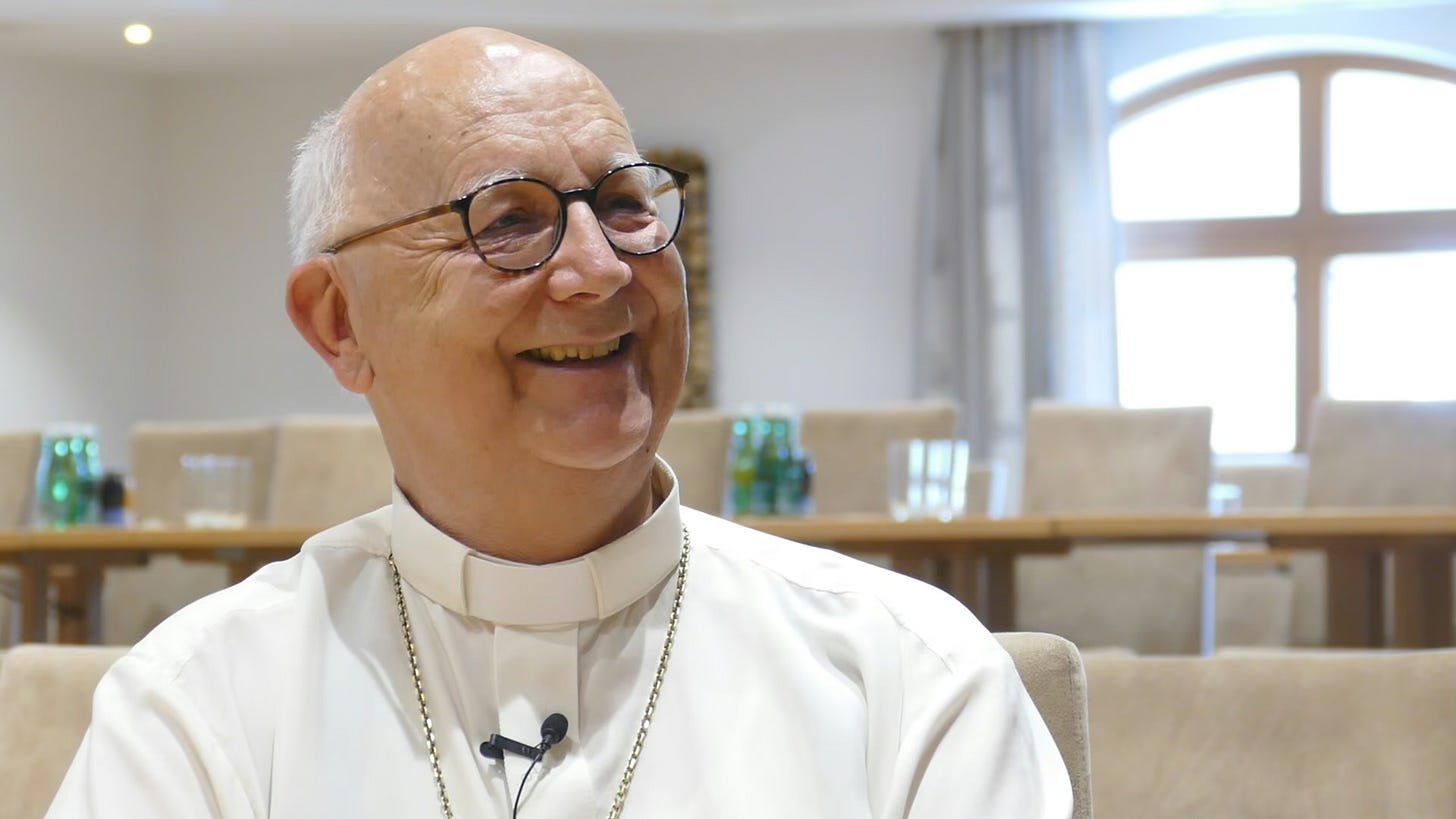
Into this atmosphere comes Bishop Marian Eleganti, who recently stated that he had written to Leo XIV about homosexuality among clergy and its relevance to the abuse crisis. He pointed to the disproportionate number of male victims in Church abuse studies and that the pattern cannot simply be ignored.
That is enough to make the ecclesiastical HR department reach for the smelling salts.
For years, the approved explanation has been “clericalism.” That word has the great advantage of explaining everything while naming almost nothing. It can be stretched over abuse, cover-up, ambition, secrecy, careerism, cowardice, and sexual corruption without forcing anyone to ask about networks, appetites, seminary cultures, episcopal patronage, or the particular shape of the crisis.
Eleganti is not saying that every homosexual priest is an abuser. However, he is saying that the clerical abuse crisis has empirical features, and one of them is the striking number of male victims. In the United States, the John Jay data have long been cited for the finding that most alleged clerical abuse victims in the studied period were male.
The old Catholic mind would know how to discuss this without hysteria. It would distinguish inclination from act, temptation from sin, person from network, prudence from cruelty, and mercy from institutional suicide. The modern Catholic mind, trained in slogans, usually has only two settings: denial or panic.
So the matter gets buried.
And while it is buried, the same bishops who cannot bring themselves to speak plainly about sexual corruption will happily warn seminarians against “fundamentalism.”
Funny how that works.
Germany’s Seminary Without the Furnace

The German bishops published their new national norms for priestly formation on April 28. The document, formally confirmed by the Vatican’s Dicastery for the Clergy on March 11, replaces the 2003 norms and is now binding for Germany’s dioceses. The bishops describe the new approach as holistic, communal, missionary, synodal, and aimed at forming a “dialogical existence.” They also emphasize psychology, decentralized formation, cooperation with other pastoral professions, and the involvement of “competent women” at all levels.
There is your new priest.
Not first the man of sacrifice, the man configured to Christ the High Priest, the man trained to stand at the altar, preach the truth, hear confessions, battle demons, bury the dead, and absolve sinners before judgment.
First, the dialogical personality.
Germany’s priestly collapse makes the whole thing even more absurd. Recent reporting put German diocesan ordinations at historic lows, with only a tiny number of men ordained in recent years compared with hundreds in the early 1960s.
This is the part that should shame the entire experiment. The German Church has spent decades dissolving Catholic identity into bureaucracy, lay ministry, synodal process, sexual revolution management, state-funded institutional maintenance, and theological dissent with pension benefits. The fruit is there for anyone with eyes. Empty seminaries. Empty pews. Empty convents. Empty language. Empty sacraments surrounded by committees.
And the cure? More process. More psychology. More synodality. More female consultation. More warnings about fundamentalism.
One begins to suspect that “fundamentalism” in this context does not mean actual extremism. It means the dangerous possibility that a young man might believe the Creed, prefer the Roman Mass, distrust the German episcopal machine, accept Catholic sexual morality, and think the priesthood is a supernatural vocation rather than a ministry track inside a collapsing ecclesial bureaucracy.
That sort of man must be screened.
Germany does not need a new Ratio. Germany needs repentance, fasting, exorcism, and bishops who fear God more than they fear the editorial board of Die Zeit.
But repentance is hard.
Updating formation documents is easy.
Rome Gives the Family a Worm Farm
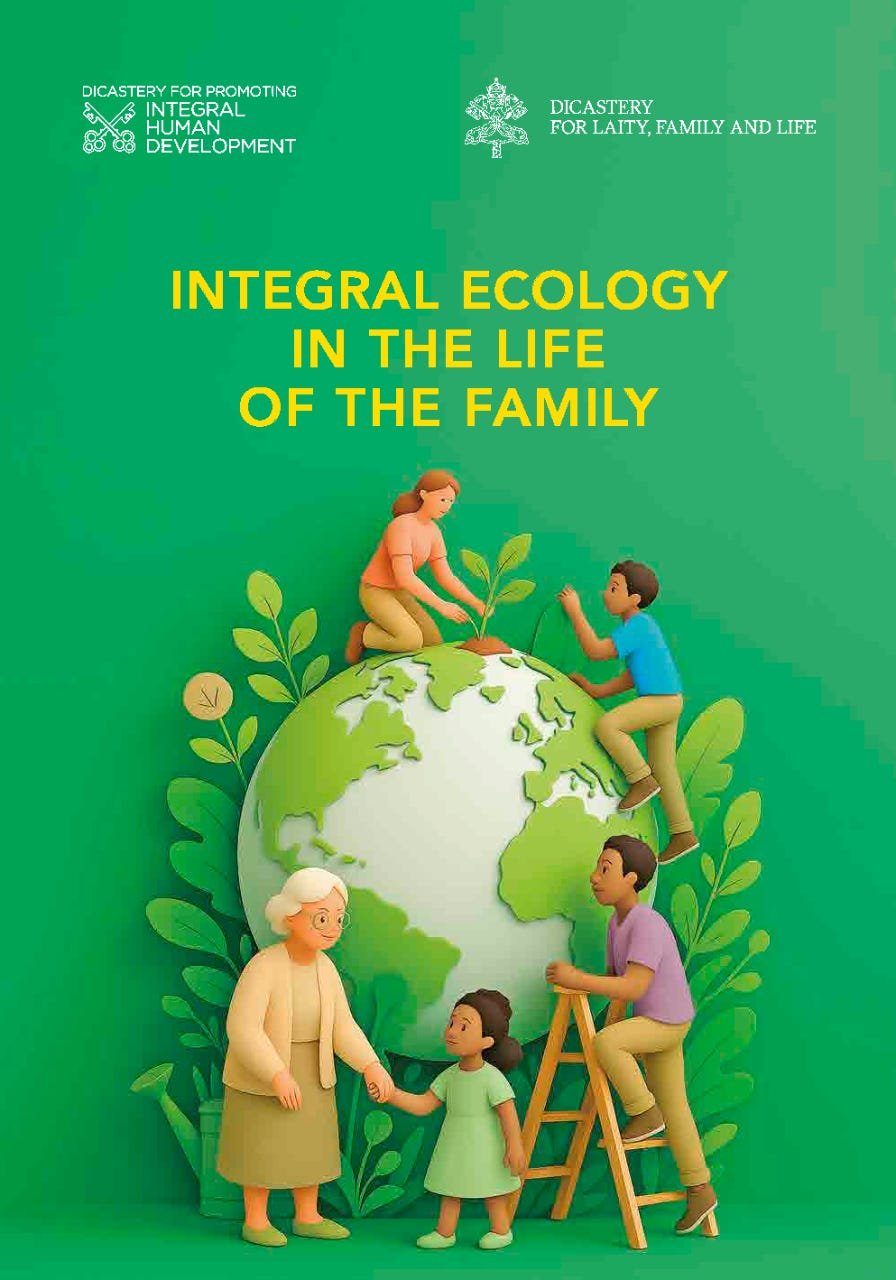
Then comes the Vatican handbook.
The Dicastery for Promoting Integral Human Development and the Dicastery for Laity, Family and Life have published Integral Ecology in the Life of the Family, presenting it as a practical resource for families inspired by Laudato Si’ and Amoris Laetitia. The official Vatican summary says the text is organized around seven objectives derived from the Laudato Si’ Action Platform: the cry of the earth, the cry of the poor, ecological economics, ecological lifestyles, ecological education, ecological spirituality, and community life.
Read that list again and ask yourself what century of Catholic family life it sounds like.
The Vatican could have given families a handbook on praying the Rosary in the home, restoring Sunday worship, teaching children modesty, guarding them from pornography, rebuilding paternal authority, preparing sons for priesthood, preparing daughters for religious life or motherhood, surviving the apostasy of adult children, resisting public school indoctrination, living sacramental marriage under economic pressure, or making confession normal again.
Instead, the official pastoral imagination goes to ecological lifestyles.
The PDF’s practical suggestions include creating a compost bin or worm farm, planting pollinator-friendly species, collecting rainwater, improving household insulation, sorting waste, using solar devices, and exploring government or NGO funding for ecological projects and even keeping “a rain gauge and monitoring it.”
A worm farm.
For Catholic families.
In 2026.
At some point, parody resigns.
Nobody sensible objects to stewardship of creation or needs to be told that a family garden can be a good thing. The problem is the center of gravity.
Catholic families are not being crushed primarily because they forgot to monitor rainfall. They are being crushed because the Faith has not been handed on, fathers have been weakened, mothers have been abandoned, children are catechized by screens, marriages are entered lightly and broken casually, pornography reaches boys before puberty, girls are taught to hate motherhood, parishes often offer little more than sentimental music and therapeutic homilies, and Catholic schools frequently baptize the same revolution parents are trying to resist.
The Vatican knows the family crisis is real. Cardinal Farrell himself has previously pointed to catastrophic declines over recent decades in infant baptisms and Catholic marriages, and to the weakening transmission of faith within families.
So Rome has the numbers, the offices, and the paper.
And Rome gives us compost.
The Martyrs Still Know
The Carmelites of Compiègne understood something we have almost lost. They knew that the Church and the State cannot be healed by slogans, programs, or carefully managed ambiguity. They offered themselves. They sang. They mounted the scaffold one by one. Their peace was not the peace of accommodation. It was the peace of women already dead to the world before the blade fell.
That is why their story still burns.
It burns more brightly now that their living community is closing. It burns more brightly when Rome speaks about ecological conversion while Catholic children lose the Faith. It burns more brightly when German bishops treat traditional conviction as a psychological warning sign. It burns more brightly when federal agents treat old Catholicism as a possible extremist seedbed.
The martyrs are not decorative.
They are witnesses against us.
They witness against the State that fears Catholic truth. They witness against bishops who fear Catholic clarity. They witness against Vatican offices that can produce eighty pages on family ecology while ordinary parents beg for help raising children who still believe in God. They witness against the soft, smiling apostasy that can commemorate sacrifice without imitating it.
In 1794, the revolution sent the Carmelites to the guillotine.
In 2026, the revolution is more polite. It lets the cloister close, publishes a handbook on composting, warns against fundamentalism, and calls the whole thing renewal.
But the old song has not been silenced.
It is just harder to hear.