"Speculatores eius cæci omnes, nescierunt universi; canes muti non valentes latrare" (Is 56, 10). His sentinels are all blind, none of them knows anything; they are mute dogs, incapable of barking.
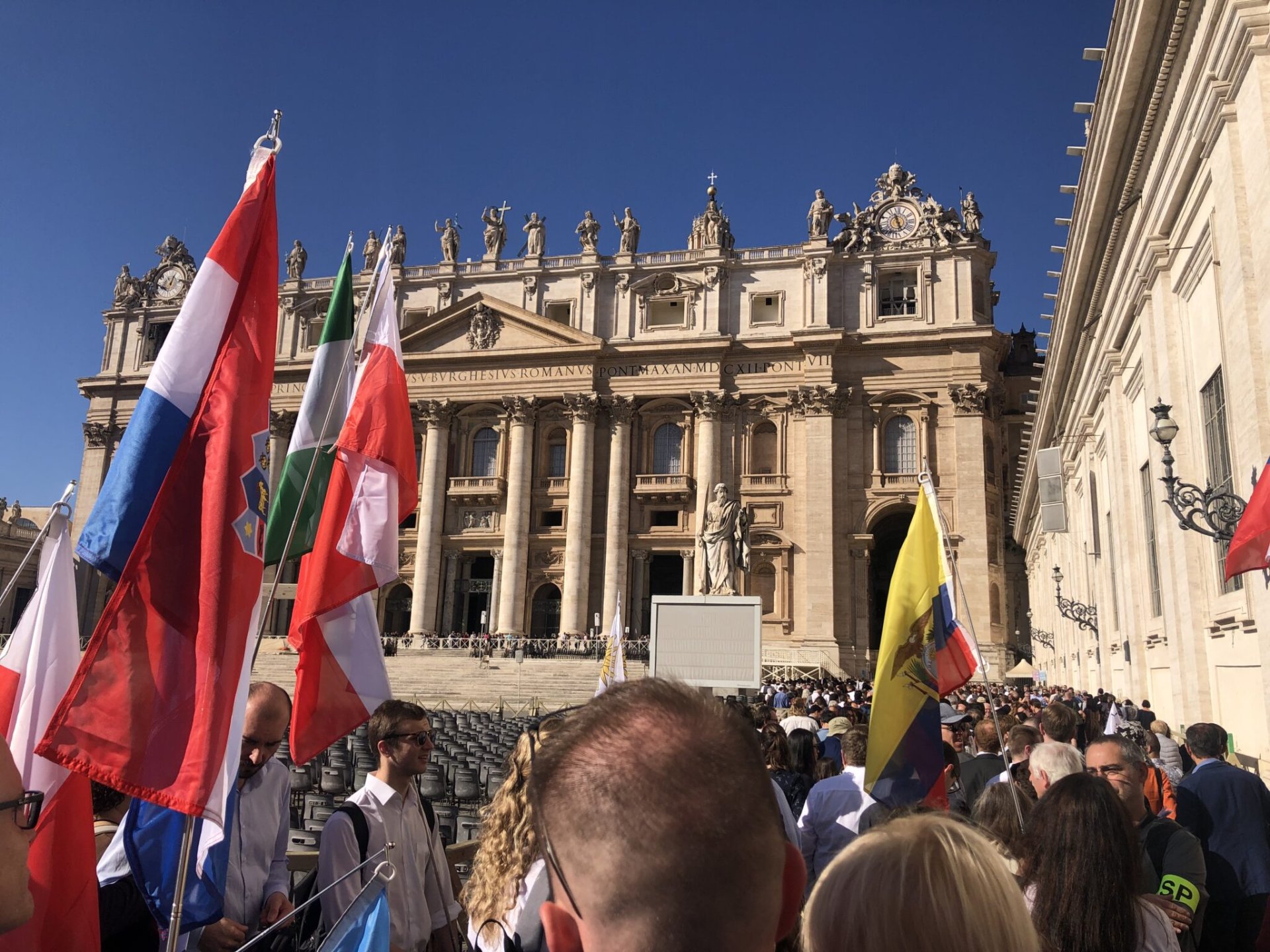
The facts are now well known; I summarize them only because the chronology is already a verdict. On August 7, the Secretariat of State denied the Mass « usus antiquior ». On September 30, in a letter that arrived in Paris on October 12 according to the National Catholic Register, the Secretariat of State denied even entering in procession into the Vatican Basilica to pray for the Pope and adore the Blessed Sacrament. On October 23, twenty-four hours before the pilgrimage, the organizers announced it. On October 24, pilgrims, who had come from every part of the world, were stopped at the limit of Italian jurisdiction. Nothing was said beforehand: neither the August letter, nor the September one, nor the one that arrived eleven days earlier.
I am not interested, at this point, in the Palace. The Palace did what the Palace does: it replied in two lines, without a reason, with a protocol number. The Palace, at least, is consistent with itself.
I am interested in those who should have told the faithful what they knew, and who chose to remain silent so as not to lose face.
The organizers knew, they had the letters in hand. Schneider knew, who had requested the Mass during the private audience granted to him by the Palace: he already knew of the refusal. Whether or not the others knew – the cardinals, the professors, the monsignors and the superiors: Burke, Schneider, Barthe, Wach, those of Cristo Re, those of San Pietro, De Mattei… – who lent their name and their authority to the pilgrimage: they did not accompany the pilgrims, they abandoned them so as not to compromise their relations with the Palace. They knew, and their guilt is not only silence, but betrayal of their own faithful, upon whom the humiliation and scandal of the denial fell.
And there is worse. After allowing pilgrims to come to Rome, confusion created by commentators was lamented and it was reiterated that the pilgrimage springs from love for the Pope who rejected it. A Vatican spokesman even said that all that was needed was a more specific request, but the text of the September 8 letter contradicts him word for word. Someone then hastened to explain, after the fact, that it was ultimately a procedural matter, a misunderstanding, an unfortunate circumstance: this is shame added to shame.
And at Santa Maria Maggiore, where not only was the Pontifical denied, but the distribution of Communion was not allowed because the time granted for the Low Mass had been exceeded by eight minutes, written thanks were given to the Archpriest of the Basilica and even to the Master of Ceremonies. Nor should one forget the pathetic retraction of another exponent of tradi-conservatism, Peter Kwasniewski.
Whoever justifies the official who denies prayer before the Altar of the Chair does not defend the Church: he defends a bureaucratic fiction against the Faith, as well as his own interests.
This is the indignation. The shame is another, and it is more bitter. It is the shame of seeing men who preach the Mass of always behave, when it comes to « putting their face on the line », like employees of an administration: one does not disturb, one does not expose oneself, one says nothing as long as one can say nothing without consequences. The faithful have traveled, have prayed, and have been rejected and humiliated. Their pastors were not asked to conquer the Basilica: they were asked to warn them.
The Lord has written: « Domus mea domus orationis vocabitur cunctis populis » (Is 56, 7). All peoples, then, except the Catholics who ask only to profess and to pray. And no one, among those who knew, had the courage to say it aloud.