We must acknowledge that Deputy Laurence Rossignol has made a genuine point: she is right to refuse the word « paedophilia » when speaking of sexual violence committed against children. The term is misleading. Etymologically, it suggests a form of love for the child. Yet there is no love in domination, in assault, in incest, in the destruction of innocence. There is a crime, a predation. There is a desecration of the most vulnerable. Speaking of « child sexual abuse crimes » is therefore more accurate, clearer, and morally sounder.
But it is precisely because this first distinction is valid that we must regret that the reasoning stops halfway.
For when we then affirm that sexual violence against children most often occurs within the family, and we draw from this a general suspicion against the family, against authority, against the father, then we fall back into an old ideological reflex. A reflex well entrenched on the left: whenever evil emerges in a traditional institution, one concludes that the institution itself is the problem. The family becomes suspect. The father becomes suspect. Authority becomes suspect. And the real tragedy of children becomes an occasion to restart the old anti-family software.
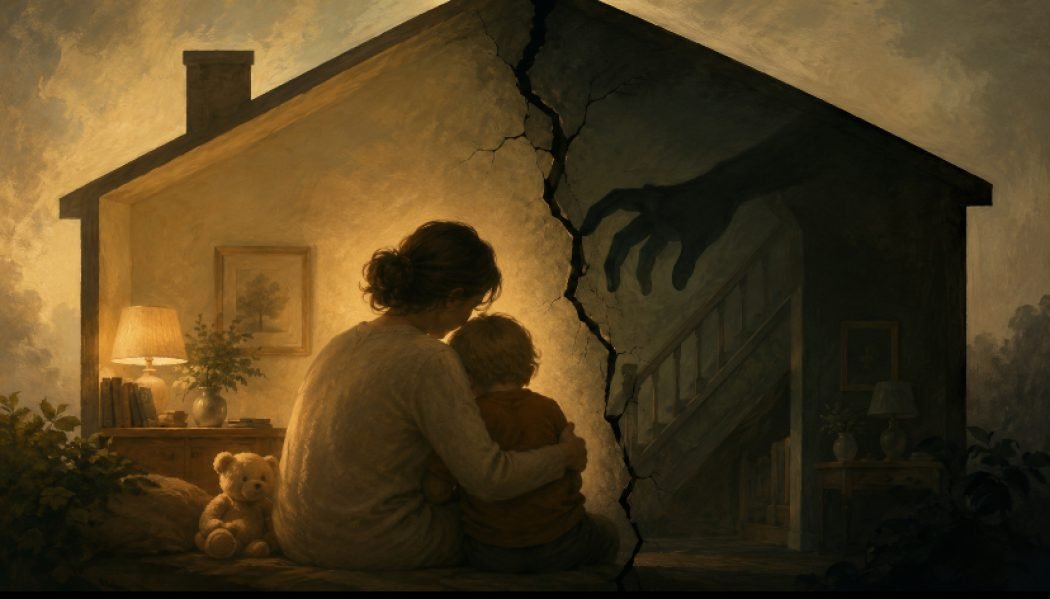
Yet this reasoning is false. It is false first because a child spends a large part of his life in his family. It is there that he sleeps, eats, depends, trusts, is vulnerable. It is therefore unfortunately not absurd that many horrors occur within this setting. It is even what makes them so terrible: they do not come from a clearly identified external source, but from the place that should have been the refuge.
But above all, this reasoning is false because it confuses the institution with its betrayal.
Sexual violence within the family is not the truth of the family. It is its absolute corruption. Incest is not the expression of the family bond: it is its monstrous inversion. A predatory father is not the incarnation of paternal authority: he is its demonic caricature. He does not represent the father; he destroys fatherhood. He does not represent authority; he defiles it.
This is where the political comparison is enlightening. The fact that dictators exist does not prove that all government is bad. It proves that power without justice becomes tyrannical. The fact that a leader can oppress does not mean that a society must renounce all authority. It means that we must distinguish legitimate authority, which protects, serves and orders, from illegitimate domination, which crushes and possesses.
The same applies to the family. The father's authority, when it is just, is not a permission granted to the strongest. It is a burden. It is a service. It is a responsibility toward the more vulnerable. It does not exist to confine the child, but to protect him. It does not exist to impose silence, but to guarantee safety. It does not exist to cover up abuse, but to prevent it from being possible.
We must therefore be very clear: defending the family does not mean covering up crimes committed within families. Defending the father does not mean defending unworthy fathers. Defending authority does not mean defending impunity. Quite the opposite. A society that truly believes in the family must be relentless toward those who desecrate it. A society that truly believes in fatherhood must be relentless toward those who use the position of father, stepfather, uncle or close relative to destroy a child.
The true answer is therefore not to deconstruct the family. It is to recall what a family worthy of the name should be: a place of protection, transmission, tenderness, justice, speech and safety. And when it becomes the opposite, when it becomes the place of secrecy, domination and fear, then it does not deserve to be excused in the name of the family. It must be judged in the name of what the family should be.
This is why the word « child sexual abuse crimes » is apt. But it calls for another clarification: these crimes do not reveal the truth of the family. They reveal the depth of its betrayal. And this betrayal must be fought not against the idea of family, but in the name of the child, in the name of justice, and in the name of an authority finally restored to its first vocation: to protect the weak.