
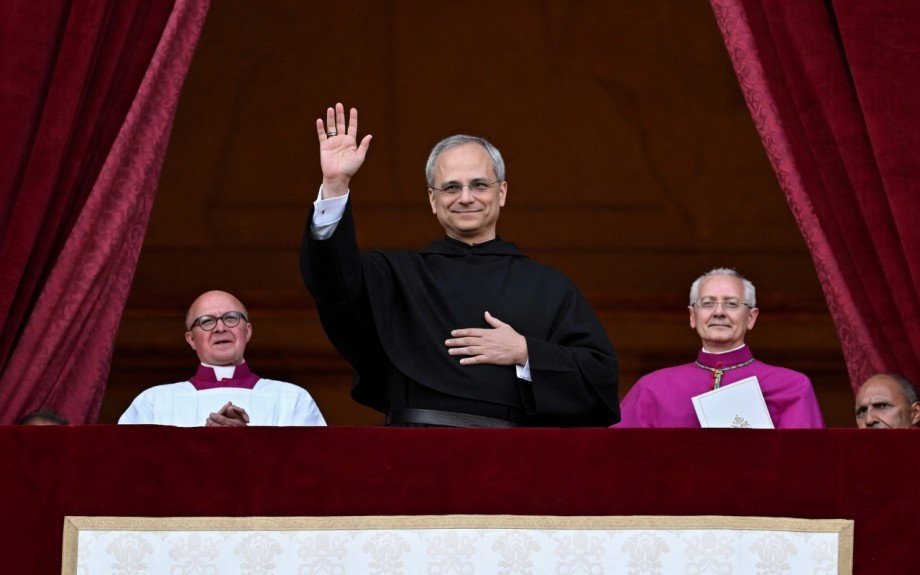
To the kind attention of His Eminence Most Reverend Cardinal Pietro Parolin Secretary of State of His Holiness and, for information: to His Eminence Most Reverend Cardinal Kevin Joseph Farrell Camerlengo of the Holy Roman Church; His Eminence Most Reverend Cardinal Víctor Manuel Fernández Prefect of the Dicastery for the Doctrine of the Faith; His Excellency Most Reverend Monsignor Anthony Randazzo Prefect of the Dicastery for Legislative Texts
Your Eminences and Your Excellency,
we undersigned baptized faithful deem it necessary to bring to Your attention certain no longer deferrable questions of canonical order that do not permit us, in the present state of affairs, to arrive at recognition of the certain legitimacy of Pope Leo XIV as Supreme Pontiff of the Roman Catholic Church.
Such perplexities pertain to evident irregularities with respect to the apostolic constitution Universi Dominici Gregis, also in relation to what is provided by articles 76-77 thereof wherein it is specified how the nullity of an election, in case of infraction of the prescribed norms, does not require any ecclesiastical declaration thereon.
The infractions in question concern:
1. the question of the failure to renounce the Petrine office by Pope Benedict XVI, in relation to what is provided by can. 332 §2;
2. the failure to declare the See vacant upon the death of the last legitimate pope, Benedict XVI;
3. the participation in the 2025 conclave of a significant number of cardinals (108) whose validity of appointment is vitiated by the irregular renunciation of Pope Benedict XVI;
4. the exceeding of the maximum threshold of 120 electors provided by current regulations;
5. circumstances, not officially denied, concerning violations of the norms on secrecy and regularity of conclave operations (a cardinal caught with a telephone after the extra omnes and another elector who left the assembly before its official closure).
It is further observed that, since 2023, multiple requests for clarification have been presented to the Holy See also by means of petitions signed by over 20,000 faithful and through contributions of canonical-doctrinal nature addressed to the Secretariat of State without, to date, any official response having been received.
In light of can. 212 §3, which recognizes to the faithful the right-duty to make known to the sacred Pastors their thoughts for the good of the Church, it is emphasized that the persisting uncertainty concerning the validity of the acts in question produces relevant repercussions also in the civil order.
In particular, the treaty framework between the Holy See and the Italian Republic is recalled, originally established by the Lateran Treaty of February 11, 1929, subsequently subject to bilateral revision of the concordat discipline through the Villa Madama Agreement of February 18, 1984, made enforceable in the Italian legal system with Law March 25, 1985, no. 121.
This arrangement, within the principles of bilaterality and cooperation, is relevant for the recognition of the civil effects of acts of ecclesiastical origin, with consequent need for certainty regarding their canonical validity.
Similarly, attention is drawn to the provisions of canon law that provide for sanctions for usurpation of ecclesiastical office.
From this perspective, should the critical issues set forth above prove to be well-founded, the relative sanctions provided by canonical law would be incurred by the Most Reverend Father Robert Francis Prevost OSA, insofar as unlawfully: consecrated bishop, created cardinal and elected to the pontifical throne with the name of Leo XIV.
All this being stated, it is requested that the competent ecclesiastical Authorities proceed without further delay to provide a formal clarification regarding the canonical legitimacy of Pope Leo XIV, through an official pronouncement, expressed in reasoned form and founded on adequate canonical and documentary verification.
In the absence thereof, we shall be compelled to appeal to the Italian legal system by virtue of the aforementioned Lateran Treaty, as well as to inform the embassies of the States in concordat with the State of Vatican City.
In light of what has been set forth above, we present the following canonical study:
WHEREAS IN FACT AND IN LAW
that the Apostolic Constitution Universi Dominici Gregis constitutes lex specialis governing, ad normam iuris, the election of the Roman Pontiff;
that, pursuant to can. 332 §1 CIC, the acquisition of the Petrine office is subordinate ad validitatem to legitimate election and its acceptance;
that cann. 124-125 CIC establish the essential requirements of validity of juridical acts, whose absence entails nullity or invalidity;
that, in the year 2025, a Conclave took place from which the current holding of the Petrine office resulted;
that there have emerged, in public forums, reports, observations and interpretive criticalities concerning the substantive and procedural regularity of said Conclave;
that, among such reports, the declarations made by Dr. Angelo Giorgianni also assume relevance, which are recalled not as proof, but as notitia criminis or in any case notitia iuris suited to prompt the exercise of the power-duty of verification by the competent Authority;
NOTED IN LAW that certainty regarding the holding of the Petrine office constitutes a primary juridical good of the canonical system, as the foundation of visible ecclesial communion;
that can. 212 §3 CIC recognizes to the faithful the right-duty to represent to the Pastors questions concerning the good of the Church;
that controversies relative to ecclesiastical offices fall within the competence of ecclesiastical authority (cann. 1400 ss. CIC);
that the persistence of an objective doubt (dubium positivum et prudens) regarding the validity of the election affects the certainty of law and the orderly exercise of ecclesiastical power;
IN LAW - PENAL AND SANCTIONARY PROFILES that Book VI of the Code of Canon Law, as reformed by Apostolic Constitution Pascite Gregem Dei (2021), provides for a reinforced sanctionary system for the protection of ecclesial order; that, pursuant to cann. 1378 and following CIC, as well as further applicable penal provisions, the illegitimate exercise of an ecclesiastical function configures a canonical illicit subject to sanction;
that, should, quod Deus avertat, there be configured an improper exercise of the Petrine office, it would be a matter of exceptional gravity, affecting the very apex of the ecclesial system;
that, in such a case, the possible perpetrator of the usurpation of the supreme ecclesiastical office would be subject to the most severe disciplinary and penal sanctions provided by canon law, according to the evaluation of the competent Authority;
that precisely the potential gravity of such a matter requires, on the juridical plane, a certain, formal and definitive investigation;
ALL THIS BEING STATED THE UNDERSIGNED HEREBY FORMALLY NOTIFY AND PROTEST the competent ecclesiastical Authorities to:
1. proceed ex officio to the opening of a complete and documented canonical investigation proceeding, regarding the circumstances pertaining to the 2025 Conclave;
2. verify, in facto et in iure, the full conformity of the elective operations to the prescriptions of Universi Dominici Gregis;
3. issue an official, public, reasoned and juridically binding pronouncement concerning the validity or invalidity of the election;
OF GRAVE CONSEQUENCES IN CASE OF PERSISTING DOUBT The undersigned represent that the persistence of an objective and unresolved doubt (dubium grave, positivum et prudens) produces legally and pastorally relevant effects.
In particular, sacred ministers, in the internal forum, could consider themselves not bound by the obligation of explicit hierarchical communion in liturgical actions;
there could occur suspension or alteration of the mention of the Roman Pontiff in the Canon of the Mass;
the faithful could abstain from participation in celebrations deemed canonically doubtful with consequent harm to visible ecclesial communion, disarticulation of sacramental unity and compromise of the juridical order of the Church.
Such a situation constitutes a grave and present detriment to the entire ecclesial body and cannot be left to subjective evaluations.
CONCLUSIONS The undersigned, ad normam iuris: act in tutelam veritatis; in certitudinem iuris restaurandam; in unitatem Ecclesiae tuendam; and FORMALLY REQUEST AND URGE that the competent Authority be pleased to:
pronounce itself definitively on the validity of the election;
remove every state of juridical uncertainty;
guarantee full certainty regarding the holding of the Petrine office;
With respect,
The following signatories
Andrea Cionci
…