
5 hours ago
There are statements so thoroughly post-Catholic that the first temptation is to suspect a bad translation.
Unfortunately, Leo XIV delivered this one in several languages.
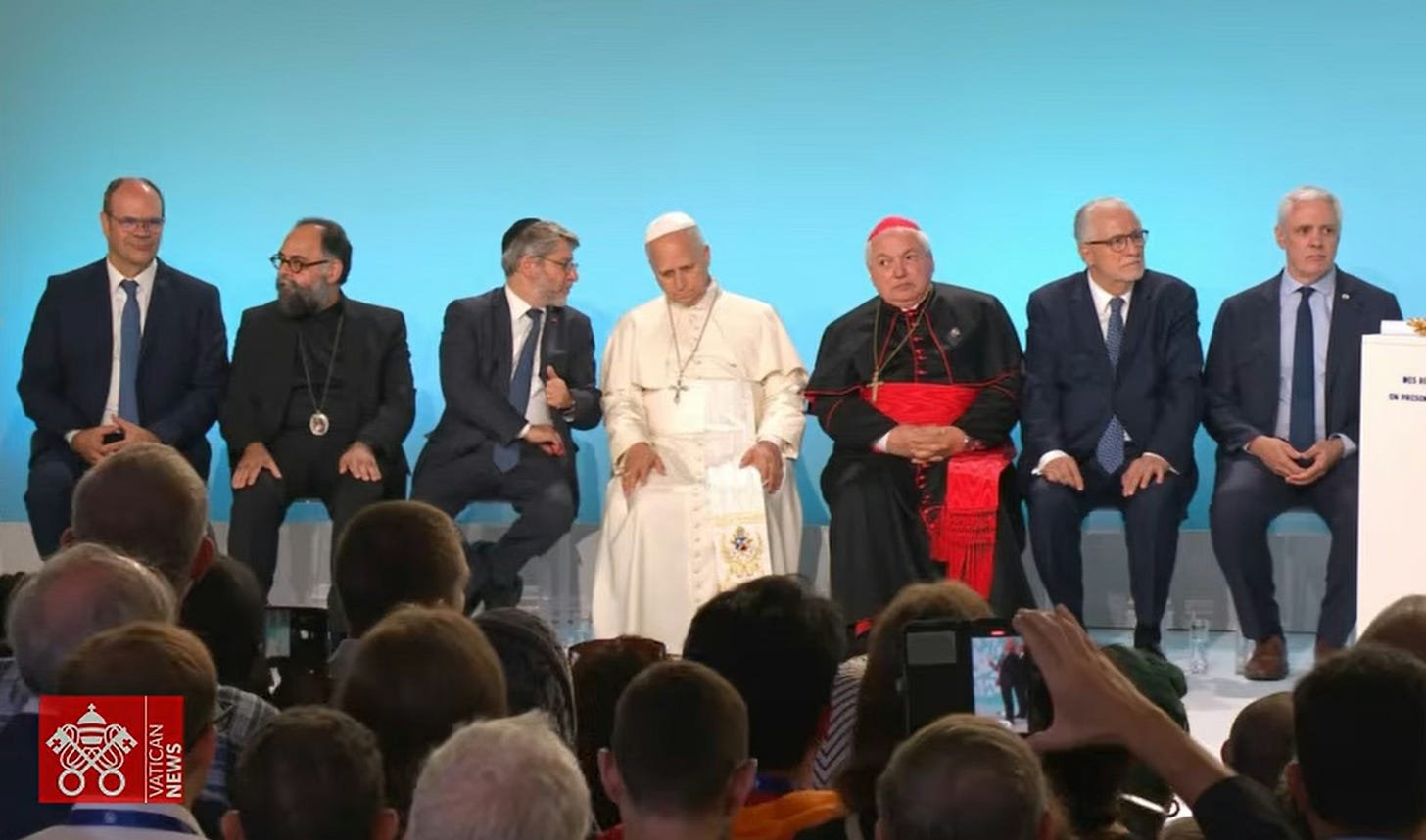
Standing Monday before representatives of Islam, Judaism, Buddhism, Protestantism and Orthodoxy in Metz, Leo informed his audience that dialogue requires each participant to serve as a “guardian” of his own religious tradition. Then came the remarkable assertion that the “fruitfulness of religious traditions” is revealed in their service to peace and fraternity.
Finally:
“Religions are guardians of life, for they affirm its sacred value.”
These are Leo’s words in the official Vatican text.
Read them again from the standpoint of the religion Catholics professed before the ecumenical fog machine was switched on. A Buddhist should guard Buddhism. A Muslim should guard Islam. A Jew should guard Judaism. Their respective religions possess “fruitfulness.”
“Religions,” collectively, guard life.
And the alleged Roman Pontiff’s role is apparently to congratulate everybody for remaining faithful custodians of the religious traditions separating them from the Catholic Faith.
We have traveled a very long way from “Go therefore and teach all nations.”
Guard Your False Religion
The most revealing sentence may actually precede the “fruitfulness” line.
Leo tells the assembled religious representatives that dialogue “places a direct responsibility on each of us as guardians of our respective traditions.”
Guardians?
What exactly is a Catholic supposed to want a Muslim to guard about Islam’s denial of the Trinity and divinity of Christ?
What is a Catholic supposed to want a Buddhist to preserve about a religious system possessing neither the Christian doctrine of God nor the necessity of Christ’s Redemption?
Catholics can defend every person’s civil rights. Catholics can cooperate with non-Catholics against abortion, war, pornography, human trafficking or poverty. Catholics can recognize natural truths wherever they appear. Catholics can admire courage, filial piety, generosity or chastity in someone who does not possess the Faith.
None of that requires a bishop to encourage religious error to perpetuate itself.
Pius XI described the matter rather differently.
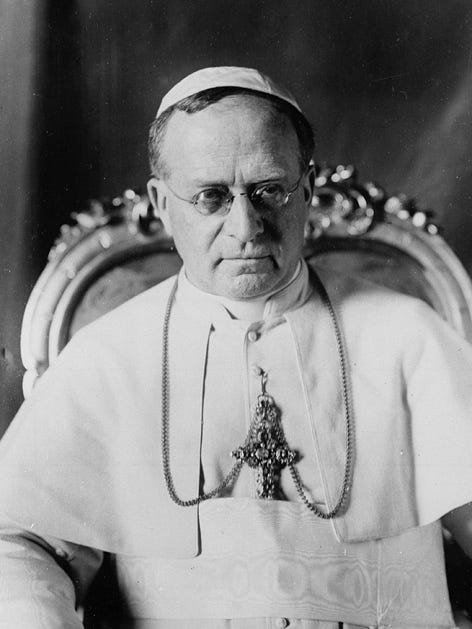
In Mortalium Animos, he taught that because God has revealed Himself, there can be only one true religion founded upon that Revelation. He did not tell separated Christians to become better guardians of their respective traditions. He prayed that they would recognize the true Church and “enter it,” united in faith and government.
That is not a difference in tone. It is a difference in direction. Pius XI’s movement points from error toward Catholic unity. Leo’s movement points toward every religious community preserving its identity while meeting the others in dialogue.
The destination has changed.
Apparently False Religions Bear Fruit Now
Then Leo speaks of “the fruitfulness of religious traditions.”
This language deserves precision. A false religion can contain truths. Islam affirms one Creator. Judaism preserves vast portions of the Old Testament. Many non-Christian moral systems preserve elements of natural law.
The truth in those systems is true because it corresponds to reality—not because religious error somehow became spiritually fecund.
That distinction used to be elementary.
That vocabulary steadily transfers praise from individual truths preserved among non-Catholics to the religious traditions themselves.
That is exactly what Hiraeth documented last week in A Journey of Hope. The Vatican document spoke of the Holy Spirit operating “within” religions and of the “spiritual treasure of religious traditions.”
Now the abstraction has walked onto a stage. The religious traditions are “fruitful.” Their representatives are their “guardians.” They jointly offer humanity religious resources for peace.
This is why Metz matters even after the theological autopsy we already performed on A Journey of Hope. The document was the doctrine in bureaucratic prose. Metz is the demonstration model.
Pius XI Said Peace Comes From Christ the King
The Metz Appeal made the problem even clearer.
Signed by Cardinal Jean-Marc Aveline alongside Muslim, Jewish, Buddhist, Protestant and Orthodox leaders in Leo’s presence, the declaration says religions provide a “privileged path” toward peace. It claims that “dialogue, prayer, meditation and different forms of spiritual practice open paths to peace.” The signatories pledge sustained dialogue, religious education about one another’s traditions and joint action for justice and peace.
There are unobjectionable propositions mixed into this. Human beings possess dignity. Religious violence should be rejected. People should live peacefully with neighbors who believe differently.
Then comes the theological substitution.
Pius XI opened Quas Primas by diagnosing the world’s disorder as the result of men and states excluding Jesus Christ and His law from public life. His solution was not a federation of religious traditions contributing their respective spiritual practices.
It was “the peace of Christ in the Kingdom of Christ.”
He expressly complained that Christ’s religion had been placed on the same level as false religions. Lasting peace, he taught, required men and nations to acknowledge the authority of Christ.
Metz reverses the visual.
Christ does not stand before the religions as King, calling men into His Church. Catholicism stands among the religions. Everybody brings something. Everybody dialogues. Everybody guards his tradition. Everybody contributes to peace.
And God, Leo concludes, will teach this religiously assorted gathering to live more fully “as his children and as brothers and sisters to one another.”
Even that sentence blurs a distinction Catholic theology once guarded carefully. All men are creatures of God and brothers according to our common human nature. Supernatural adoption as sons of God belongs to the order of grace. St. John connects that divine sonship with receiving Christ.
What a marvelous ability to dissolve such distinctions precisely when they become inconvenient.
The Other Metz Speech Makes the Contrast Worse
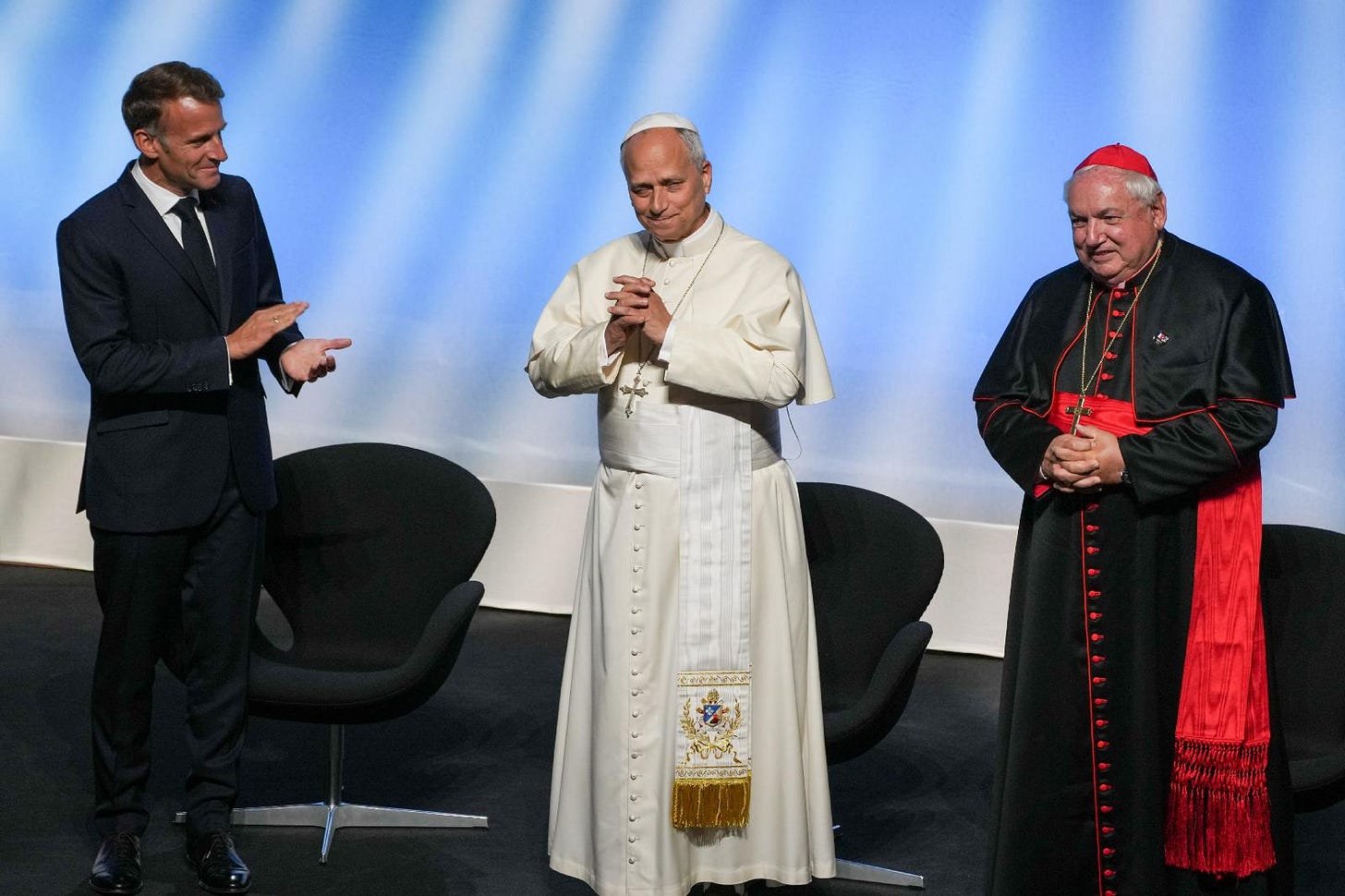
Leo’s second Metz address contains several genuinely Catholic observations. He acknowledges Europe’s Christian formation, gives Saint Benedict enormous credit for European civilization, urges young people to marry and have children, and defends human dignity from conception until death.
That actually sharpens the indictment.
Leo plainly knows Europe was made by Christianity. He says so.
Yet when discussing contemporary Europe, Christianity becomes one historical root among the resources feeding a pluralistic order built around universal rights, democracy, equality, dialogue and openness to different cultures and religions.
The old Catholic proposition was stronger: Europe flourished because it became Christian, and its recovery ultimately requires recovering Christ.
The new proposition is that Christianity gives Europe useful values with which it can conduct a successful dialogue with everybody else.
Christian civilization becomes a donor to multicultural civilization.
That is a demotion disguised as praise.
Meanwhile, Barcelona Lets the Shaman Into the Church
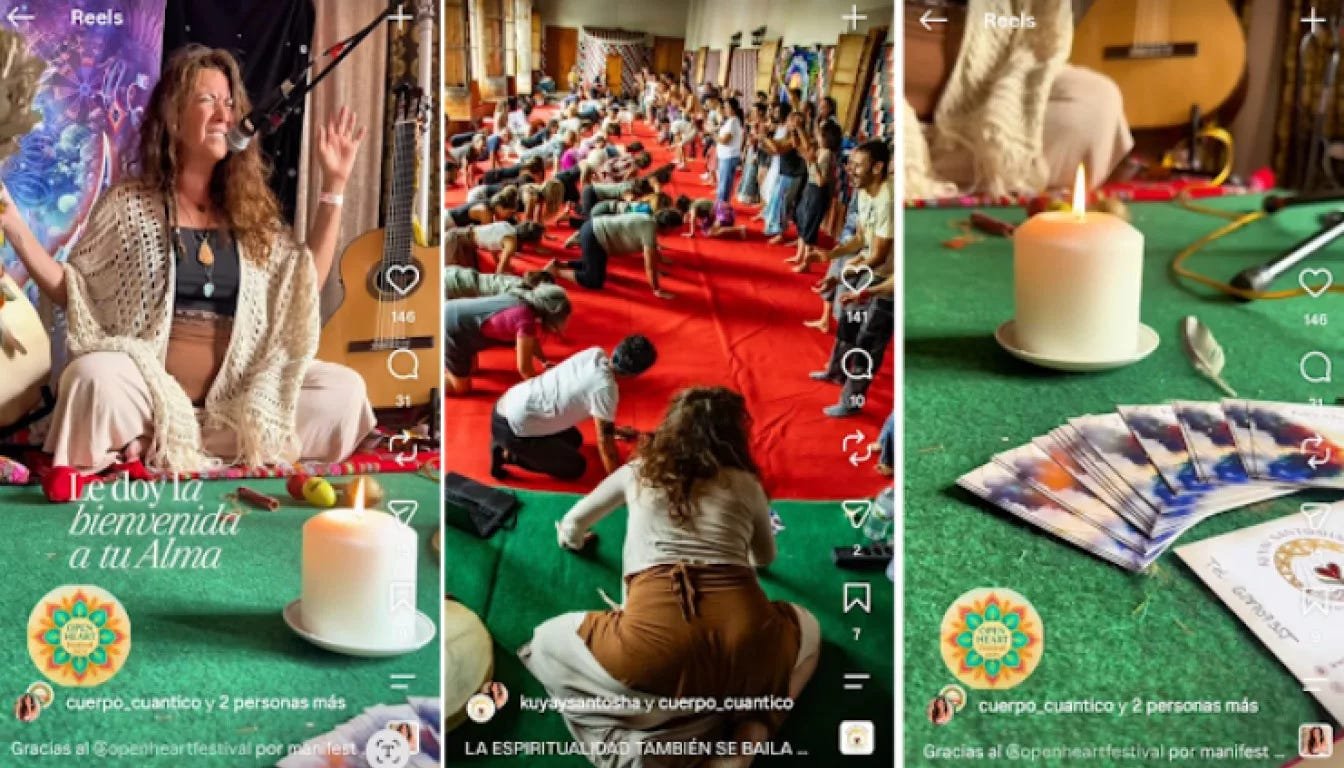
If Metz supplies the theology, Barcelona supplies the inevitable practical joke.
On September 18, Sant Pau del Camp, one of Barcelona’s historic Romanesque Catholic churches, hosted a ticketed “ritual concert” by Kuyay Santosha.
The event itself was advertised as a ritual experience where “ancestral song,” improvisation and music would form a bridge between “the human and the sacred.” Santosha’s promotional materials describe her work in terms of ancestral wisdom, medicine music, healing sounds and shamanic spirituality. Bandsintown actually categorizes her under genres including “Shamanic,” “Medicine Music,” “Healing Music” and “Sacred Music.”
She reportedly remarked that obtaining the Catholic church was extraordinarily unusual.
At least the shaman understood the situation.
Canon 1210 says that in a sacred place only those things serving or promoting worship, piety or religion are normally permitted, while things inconsistent with the holiness of the place are forbidden. The ordinary may authorize other uses, but they still cannot contradict that holiness.
So while traditional Catholics are lectured endlessly about obedience, unity and the dangers of attachment to the Mass their ancestors worshipped with, a Barcelona church can host something advertised as a shamanic ritual experience involving “medicine music.”
Perhaps somebody forgot to ask whether Pachamama had booked the hall first.
The Amazing Healing Church That Keeps Disappearing

Cardinal Jean-Claude Hollerich has supplied the perfect interpretive key for the catastrophe.
Synodality, he recently announced, is “irreversible.”
When asked about the documented decline in Catholic practice, he offered an even better phrase: the “process of decline” is also “a process of healing.”
You have to admire the system. If the churches fill, synodality is working. If the churches empty, healing is occurring. If vocations rise, renewal. If vocations collapse, purification. Heads, synodality wins. Tails, the Holy Ghost is doing something mysterious.
(...)
This Is What the New Religion Looks Like in Practice
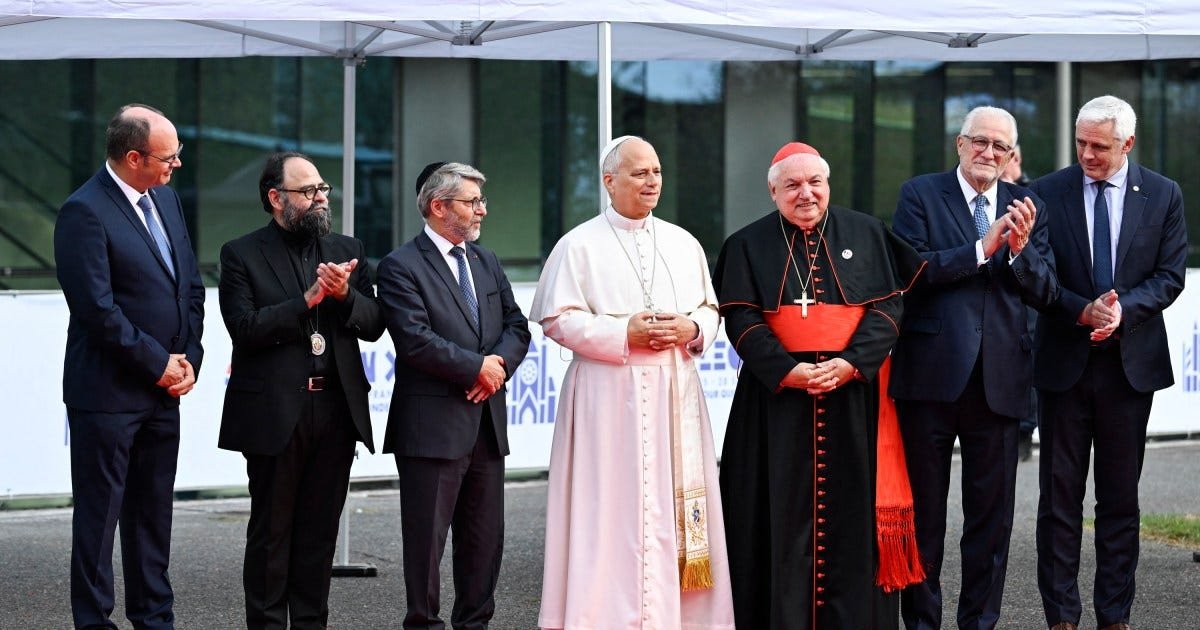
Metz supplies the theological grammar for everything around it.
The old Church looked at religious error and saw something to be corrected while loving the person trapped within it. The new establishment looks at “religious traditions” and discovers fruitfulness.
The old Church sent missionaries to convert nations. The new establishment assembles religions to sign peace appeals.
The old Church consecrated churches to the exclusive worship of God. Barcelona rents sacred stone to medicine music and shamanic ritual performance.
The old Church regarded numerical collapse as catastrophe. Hollerich discovers therapeutic benefits.
The old Church spoke openly about Christ the King as the foundation of peace. Metz speaks about dialogue, spiritual practices and religions as a privileged pathway to it.
None of this requires hatred toward non-Catholics. Precisely the opposite. If Catholicism is true, charity requires refusing to tell a man that the error separating him from Christ is spiritually fruitful merely because fragments of truth remain mixed within it.
Leo’s words in Metz therefore deserve to be taken with complete seriousness. He did not merely say that Catholics should treat other people decently. He said their religious traditions bear fruit. He told their representatives to guard them. Then he stood by while a joint declaration presented religions collectively as a privileged path toward peace.
Pius XI gave Catholics another formula: The peace of Christ in the Kingdom of Christ.
One formula seeks peace by bringing men under Christ.
The other seeks peace by gathering religions around a table.
The distance between those two visions is the distance between the religion Catholics inherited and the interreligious project now operating from Rome.