The Conclave Was Apparently Settled Over Dinner
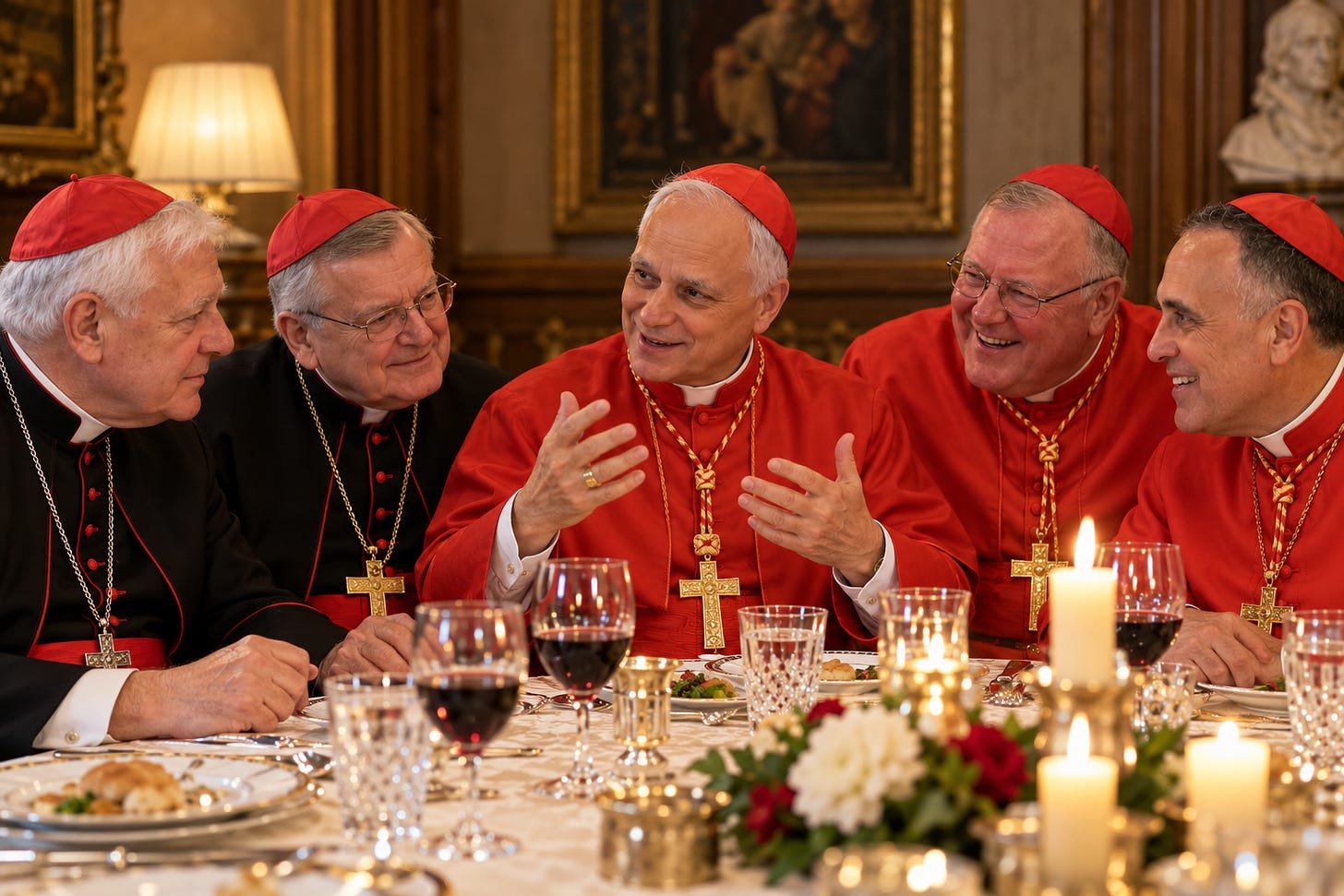
In the first days of May 2025, Cardinal Raymond Burke reportedly hosted two private dinners at his apartment in Rome’s Palazzo Rusticucci, just a short walk from St. Peter’s Square.
The first guest of honor was Cardinal Pietro Parolin, Francis’s Secretary of State. Two days later, Robert Francis Prevost took his place at the table.
Among those reportedly present were Cardinals Gerhard Müller, Timothy Dolan and Daniel DiNardo. The question was straightforward: what would the next Roman occupant do about the liturgical, theological and moral devastation left by Francis?
According to a remarkable August 21 report by Francesco Capozza in Il Tempo, subsequently republished by Rorate Caeli, Parolin failed the examination.
After he departed, one cardinal reportedly announced: “We cannot trust him. We will vote for anyone except Parolin.”
Then came Prevost.
The same questions were asked. The conservative cardinals apparently found his answers sufficiently reassuring that, according to Capozza’s sources, they agreed to direct approximately twenty to twenty-five votes toward him during the conclave.
And so the self-appointed guardians of Catholic orthodoxy allegedly helped elevate Francis’s former prefect of the Dicastery for Bishops to the position he now occupies.
What extraordinary discernment.
Prevost had participated in Francis’s synodal project, overseen episcopal appointments under his administration, and publicly embraced the postconciliar program. His credentials as an agent of continuity were hardly concealed in a locked Vatican archive.
Nevertheless, the conservatives supposedly decided that this particular Francis appointee could be trusted.
Capozza’s account relies upon unnamed sources, and its reconstruction of the voting remains unverified. We cannot establish who actually voted for whom, what Burke personally promised, or precisely what assurances Prevost offered.
But the report ends with a remarkable question: would Prevost honor the agreements supposedly reached over dinner?
Agreements?
What agreements?
Were there concrete promises concerning Traditionis Custodes, doctrinal appointments or episcopal governance? Did the cardinals obtain anything enforceable? Or were they content with another agreeable evening of Vatican conversation?
The available evidence establishes none of those possibilities conclusively.
But consider the results.
One Mass for Burke, Then the Door Closes
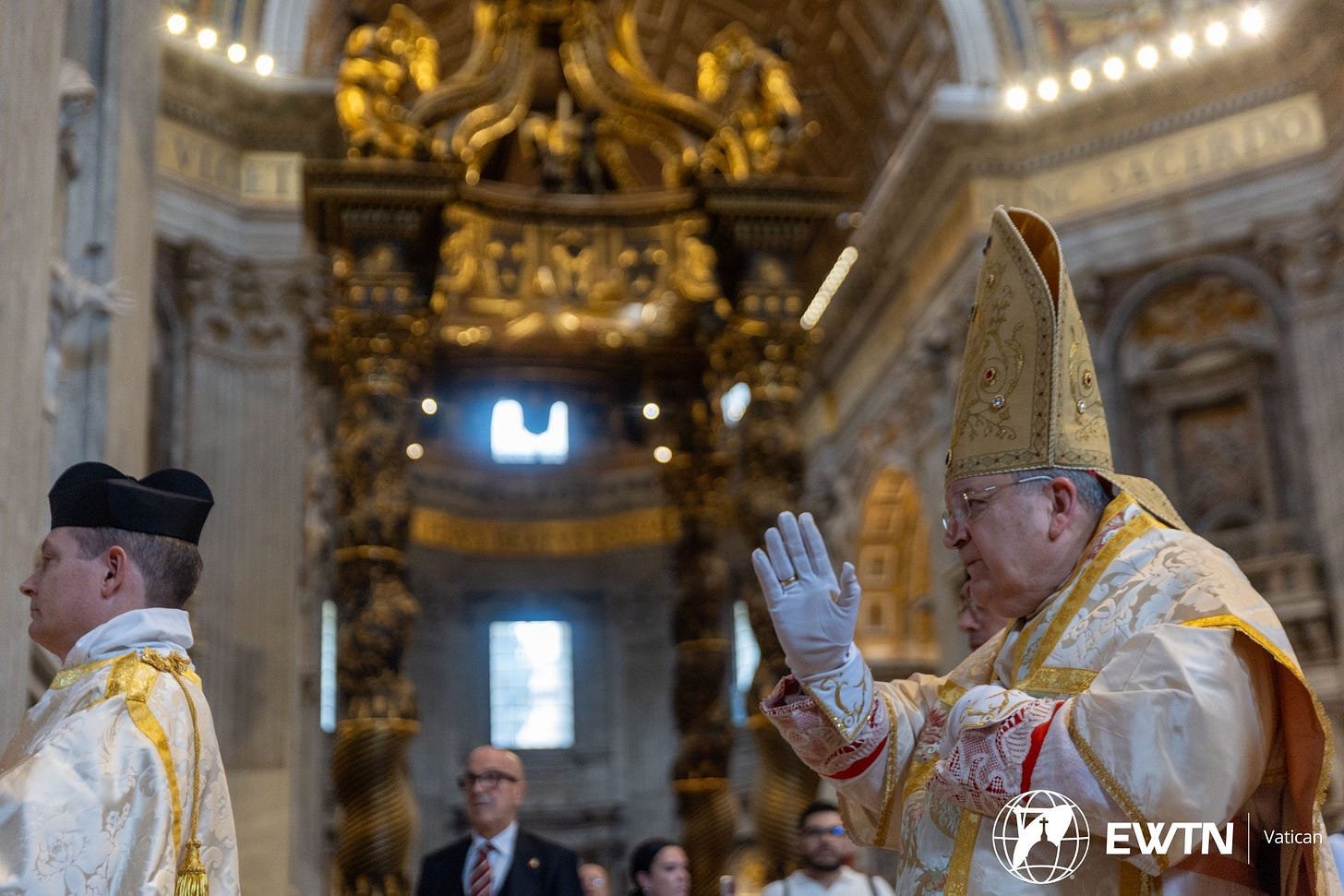
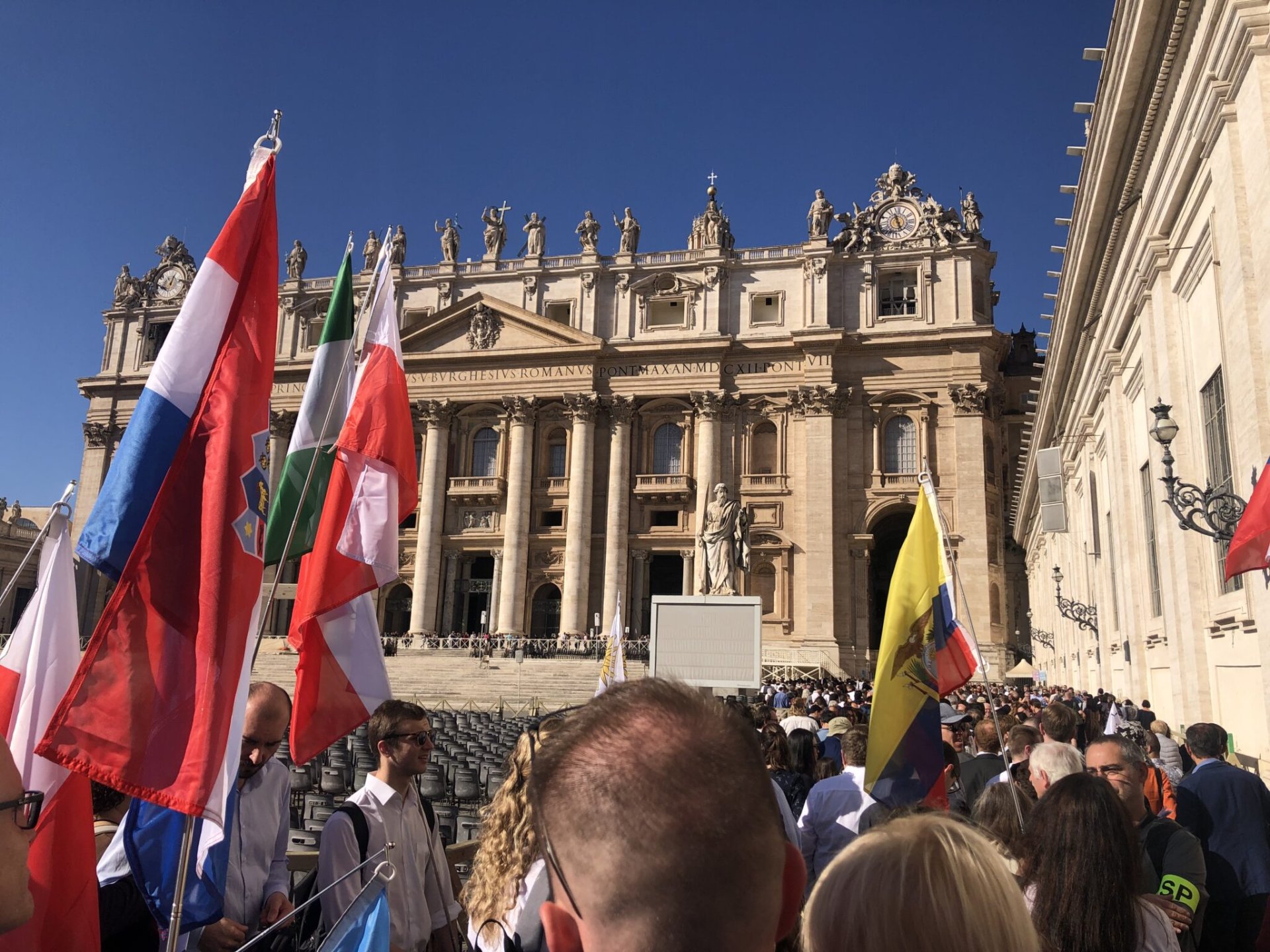
On October 25, 2025, Cardinal Burke celebrated a magnificent Solemn Pontifical Mass according to the traditional Roman Rite at the Altar of the Chair in St. Peter’s Basilica.
Leo XIV had expressly authorized it.
Thousands of traditional Catholics rejoiced. The photographs circulated worldwide, offering the tempting impression that something fundamental had changed in Rome.
Was this Burke’s reward for whatever transpired before the conclave?
Perhaps. There is no evidence establishing a direct connection between the reported dinners and the permission. The pilgrimage had requested a Mass, and similar permissions had been granted in 2021 and 2022 under Francis.
Nevertheless, the concession was real.
So was what happened exactly one year later.
The annual Ad Petri Sedem pilgrimage returned to Rome on October 23–25, 2026. Its organizers had requested another Pontifical Mass at St. Peter’s. Permission was refused in August.
They then requested something considerably more modest.
In a letter dated September 8, Father Claude Barthe asked whether the pilgrims might enter St. Peter’s in procession on October 24, pray for Leo at the Confession of St. Peter, and adore the Blessed Sacrament at the Altar of the Chair.
He even supplied the proposed time: 1 p.m., which the basilica’s sacristy had indicated was available, subject to approval.
On September 30, Archbishop Paolo Rudelli of the Secretariat of State replied that the Vatican could not grant the request.
No explanation.
More than 1,500 traditional pilgrims consequently lost their customary opportunity to enter St. Peter’s together and pray at the Apostle’s tomb.
They were subsequently welcomed at St. Mary Major, where Bishop Athanasius Schneider celebrated a Pontifical Low Mass. Rome had apparently decided that these Catholics could pray together in one major basilica, while their request involving another could be dispatched with a bureaucratic refusal.
Then the Vatican offered its explanation.
And what an explanation.
The Vatican Discovers That Prayer Requires Another Application
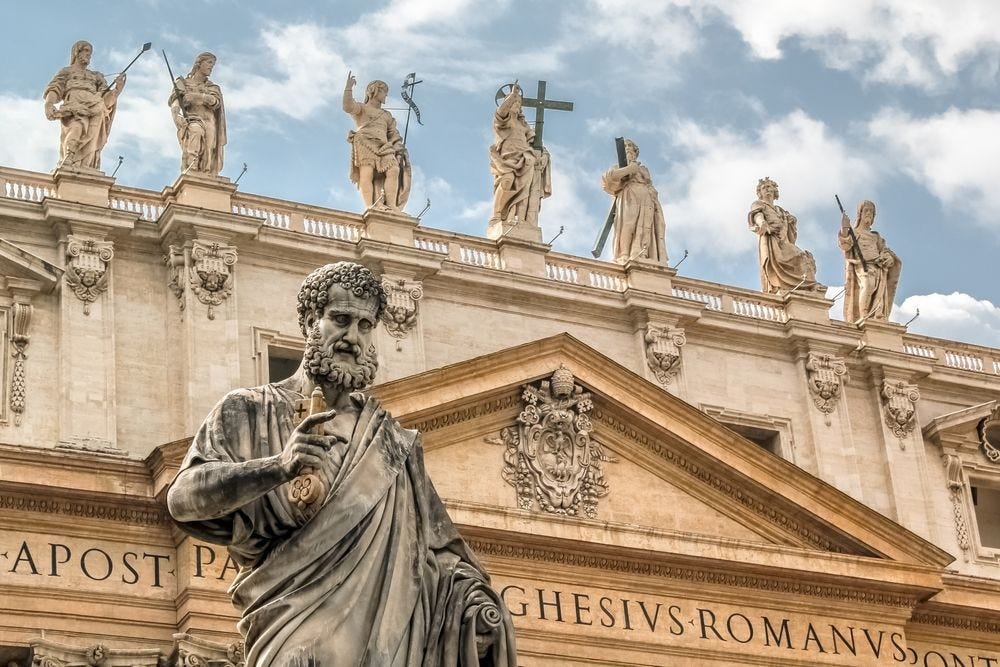
On October 26, The Pillar published comments from Vatican spokesman Matteo Bruni concerning the refused pilgrimage.
Bruni maintained that the denial concerned the procession, which is ordinarily restricted even for diocesan pilgrimages. If the organizers wanted Eucharistic adoration or prayer, he explained, they should have submitted a specific request for those activities.
Perhaps someone should show him Father Barthe’s letter.
The September 8 request explicitly mentioned praying for Leo at Peter’s tomb and adoring the Blessed Sacrament at the Altar of the Chair.
Both activities. In writing. With a date and proposed time.
Were the organizers supposed to identify which mysteries of the Rosary they intended to recite? Submit a seating chart for Eucharistic adoration? Furnish the Secretariat of State with an inventory of anticipated genuflections?
There is a narrower procedural argument available to Bruni: the organizers combined the procession and subsequent devotions in one application rather than submitting a separate contingency request for prayer without the procession.
If that distinction determined the decision, the Vatican could have explained it when responding to the September letter.
Instead, the Secretariat rejected the request without offering an alternative. Weeks later, its spokesman effectively blamed the pilgrims for failing to request activities that their original letter expressly identified.
Edward Pentin and Diane Montagna have published the relevant correspondence. Readers can judge this performance for themselves.
One wonders how many Vatican offices must be consulted before fifteen hundred Catholics are permitted to kneel before the Blessed Sacrament.
In 2025, Burke received permission to celebrate the ancient Mass at St. Peter’s.
In 2026, the faithful who returned for the same pilgrimage were refused their customary procession and collective devotions.
If the earlier celebration was supposed to demonstrate Leo’s new approach to tradition, the subsequent treatment has considerably diminished its evidentiary value.
One beautiful Mass. No restoration of the traditional rite’s freedom. Another humiliating refusal.
Some bargain.
Michael Matt Suspected a Quid Pro Quo
Readers may recall my July 22 article, “Selling Us Out Over Sagrantino: Müller’s Marching Orders to Trad Inc.”
There I documented Michael Matt’s extraordinary transformation following Prevost’s election.
Before the conclave, Matt promised to resist another Francis. Afterward, he urged traditional Catholics to suspend their criticism, trust the emerging signs, and give Leo room to govern.
His May 25, 2025 broadcast was particularly revealing.
Discussing Cardinal Müller’s appeal for relief from restrictions on the Traditional Latin Mass, Matt speculated that something had happened during the conclave.
“What does that sound like to you?” he asked. “Because to me, it sounds like a quid pro quo.”
Matt never claimed firsthand knowledge of an agreement. His theory was that conservative cardinals might have supported Prevost in exchange for liturgical concessions.
Now Il Tempo places Müller among those reportedly attending Burke’s dinners.
That coincidence proves neither the existence of a deal nor Matt’s knowledge of one. It does make his earlier speculation considerably more interesting.
For months, traditional Catholics were urged to exercise patience while the supposedly promising new pontificate developed.
The implication was obvious: stop antagonizing the man who might restore your Mass.
And what has emerged?
A carefully authorized celebration in 2025, followed by a refusal in 2026, while the underlying restrictions remain.
The great diplomatic strategy appears to have produced considerably more patience than concessions.
If the conservatives secured a secret agreement, its performance deserves examination. If they secured nothing more than reassuring words, their judgment deserves even greater scrutiny.
Either way, the traditional faithful were asked to place their hopes in men whose private calculations have delivered remarkably little.
(...)