1. Two responses to nihilism
Atheistic humanism (Enlightenment, UN, human rights) affirms that man has dignity because he is Homo sapiens, capable of reason and love. But this dignity is renegotiable: it depends on social, political or scientific consensus.
Authentic Catholicism responds that man has inviolable dignity because he is created in the image of God, redeemed by Christ and called to an eternal destiny. This dignity is founded on God, not on man.
2. The warning of great Catholic thinkers
As early as the twentieth century, prophetic voices warned of the danger of a Catholicism reduced to disguised humanism:
Henry de Lubac (French Jesuit, 1944) in The Drama of Atheistic Humanism shows that when humanity separates itself from God, it invents new religions (Marxism, scientism) under Christian vocables emptied of meaning.
Joseph Ratzinger (future Benedict XVI) develops this idea in Introduction to Christianity (1968): the danger is not declared atheism, but cryptochristianity – a faith that keeps the rites and language, but replaces Christ with a humanistic symbol (model of humanity, master of fraternity).
Romano Guardini (1956) in The End of the Modern Era speaks of a new paganism: a civilization that absorbs Christian vocabulary (fraternity, dignity) to make it a tool without God.
3. The paradox of the contemporary Church
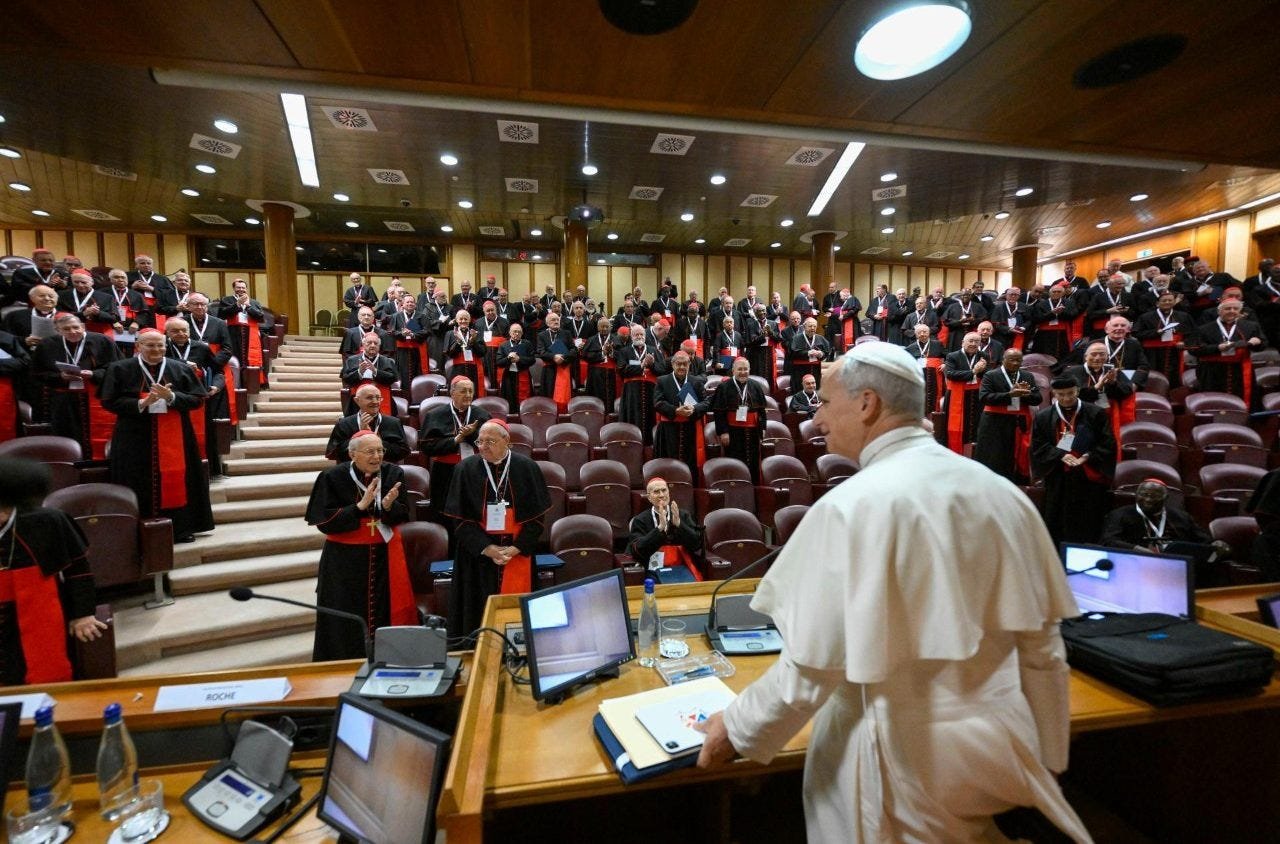
In 1983, the Congregation for the Doctrine of the Faith, led by Ratzinger and approved by John Paul II, reaffirmed the prohibition for Catholics from adhering to Freemasonry, because it promotes a universal fraternity without Christ as foundation. Yet today, the official Church adopts a similar response:
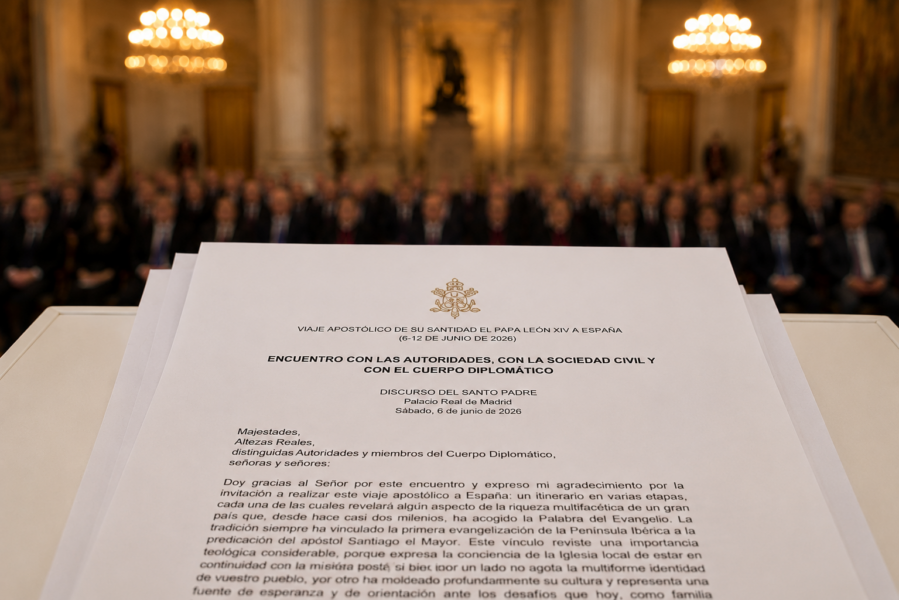
The encyclical Magnifica Humanitas (2026) of Leo XIV, according to the analysis of Bishop Joseph Strickland (bishop faithful to tradition), promotes a religious humanism: it speaks of dignity and fraternity, but marginalizes original sin, the Cross, the Last Judgment and salvation through Christ.
4. What is lost when the supernatural is eliminated
Bishop Strickland and traditional Catholics emphasize that removing these elements empties the Gospel of its profound meaning:
Original sin explains why utopias fail and why evil persists despite good intentions.
The Cross is not a symbol of solidarity, but the act by which God himself repaired man's sin.
The Last Judgment guarantees that morality has eternal weight: without it, morality becomes merely secular ethics, independent of Christ.
5. Will authentic Catholicism survive?
Yes, because Christ's promise is irrevocable (« The gates of hell shall not prevail against it »). However, the institutional Church may go through a major crisis, as in the past. The criteria for recognizing true Catholicism remain unchanged:
The infallible Magisterium of ecumenical councils.
Unbroken apostolic Tradition.
Scripture interpreted by Tradition (and not by the spirit of the age).
The Christ of faith, not a Christ reduced to humanism.
Conclusion: The decisive choice
The world needs to hear the Church proclaim that man has inviolable dignity because he is loved by God. But if the Church responds to nihilism with humanism without Christ, it loses its prophetic power. As Cardinal Joseph Ratzinger wrote in 2005: « A pagan civilization has emerged, which is in practice Christianity without Christ. »
The question is not whether the Church is wrong, but whether authentic Catholicism can survive in an institution that, at times, seems to forget it. The answer depends on our fidelity to the truth, even when it disturbs.